
Cummins Lindesberg Automates Pallet Handling with the Open Shuttle Fork
Cummins Inc. is a globally leading provider of power and mobility solutions for commercial vehicles. At their location in Lindesberg, Sweden, the company produces front and rear axles for the trucking industry using state-of-the-art manufacturing and logistics processes.
To continue to meet growing demands placed on the product range, flexibility and supply of materials, Cummins decided on a flexible automation solution featuring autonomous mobile robots (AMRs), automated storage and retrieval systems and intelligent software for their 4,100 m² (44,000 ft²) warehouse and sequencing area. Thanks to the automation, the plant is now benefiting from efficient good flows and reliable production logistics.
Open Shuttle Fork
Automated storage and retrieval systems
Software
You are currently viewing a placeholder content from YouTube. To access the actual content, click the button below. Please note that doing so will share data with third-party providers.
More InformationThe biggest advantage is that the warehouse is now fully automated. The AMRs transport the pallets automatically, the AS/RS keeps track of inventory, and the host creates and sends the transport orders to the warehouse control system. We were able to significantly reduce our use of forklift trucks.
Raj Kamal
EU Automation Leader, Cummins Inc.
Are you looking for automated mobile robots (AMRs) for your warehouse?
Learn more about the Open Shuttles by KNAPP.
Automated pallet transport for more safety and efficiency
Efficient warehouse automation
Just-in-time production logistics
A flexible, expandable solution
Maximum safety and ergonomics
Floorspace optimization
Optimized goods flow and digitalization
The partnership with KNAPP was very solution-oriented, and KNAPP was very focused on achieving the project goals.
Markus Andreasson
Site Manager, Cummins Inc.
Are you interested in automating your company’s warehouse?
Find out more about our solutions!
Cummins: AMRs and automated storage and retrieval systems for optimal pallet handling
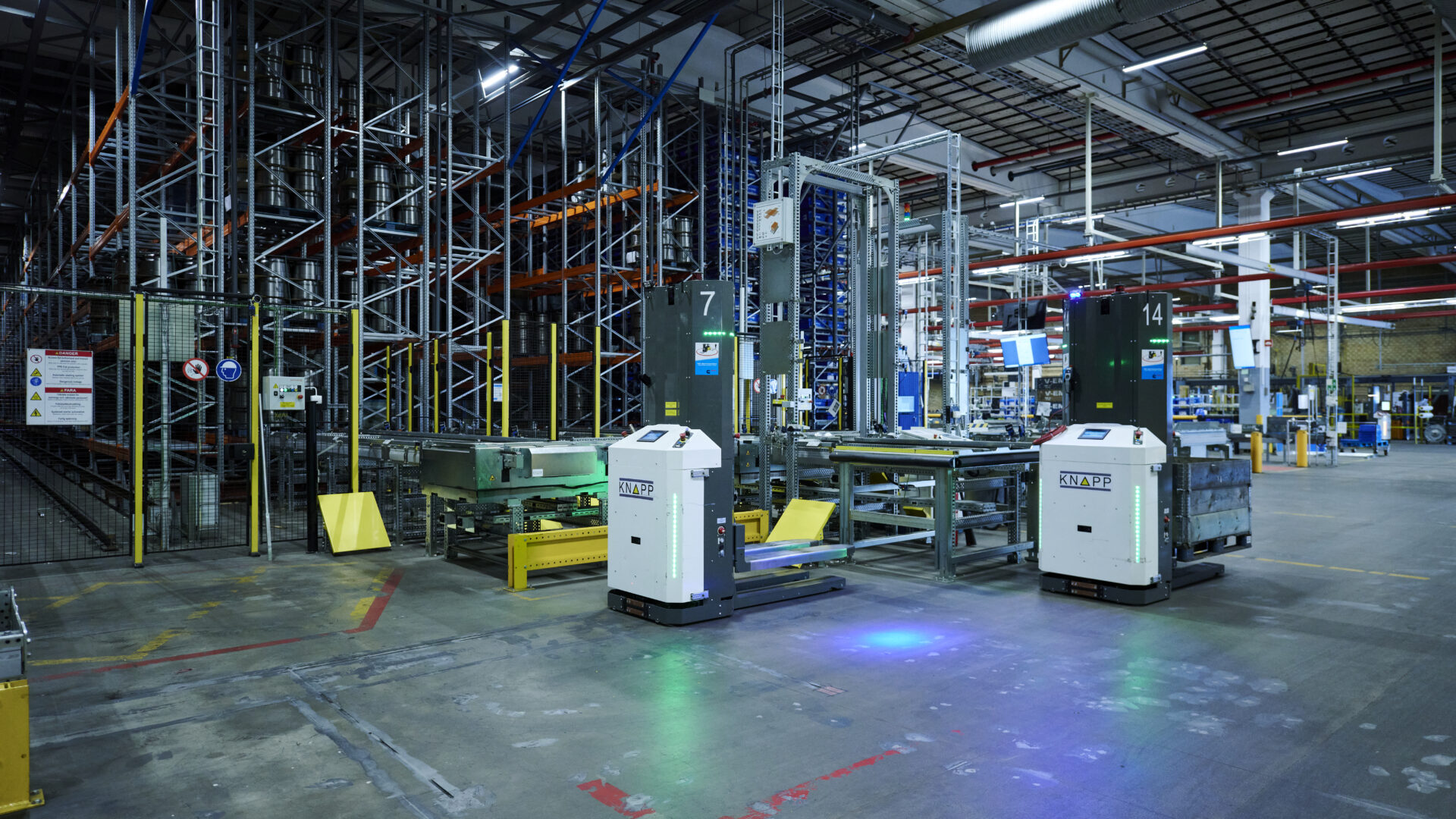
Open Shuttle Fork AMRs perform key transport tasks along the entire goods flow, from goods-in to storage and supplying production:
1 I Goods-in
At goods-in, individual pallets with fitted frames are unloaded from the truck and placed on the conveyor, which brings them into the building. They’re measured and checked for damage before being automatically scanned, registered in the host system and allocated to their target. A route label is applied and the pallet undergoes a weight check. If a pallet fails, it’s diverted. If it passes, it’s scanned again and picked up by an Open Shuttle Fork for further transport.
2 I Storage
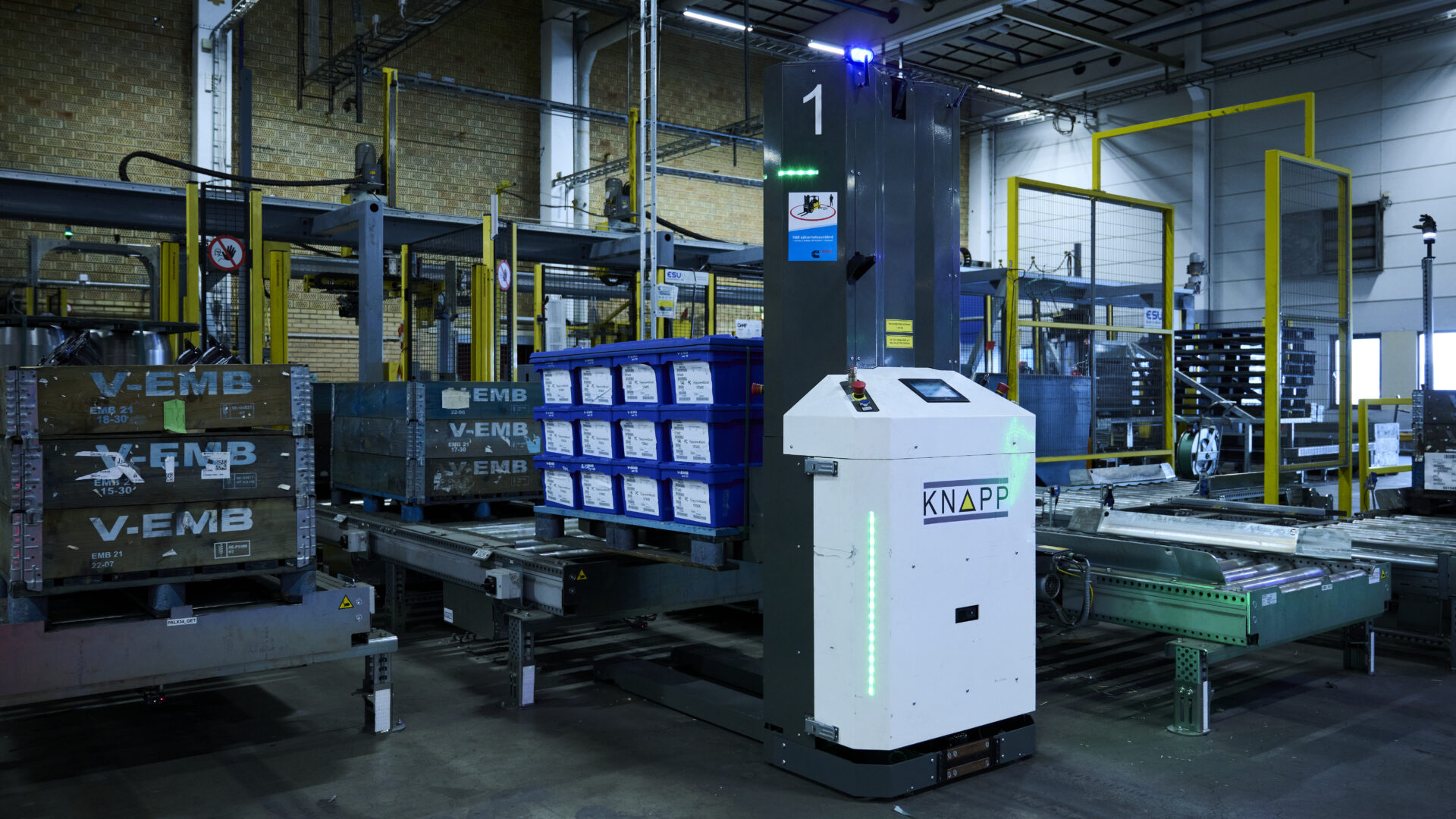
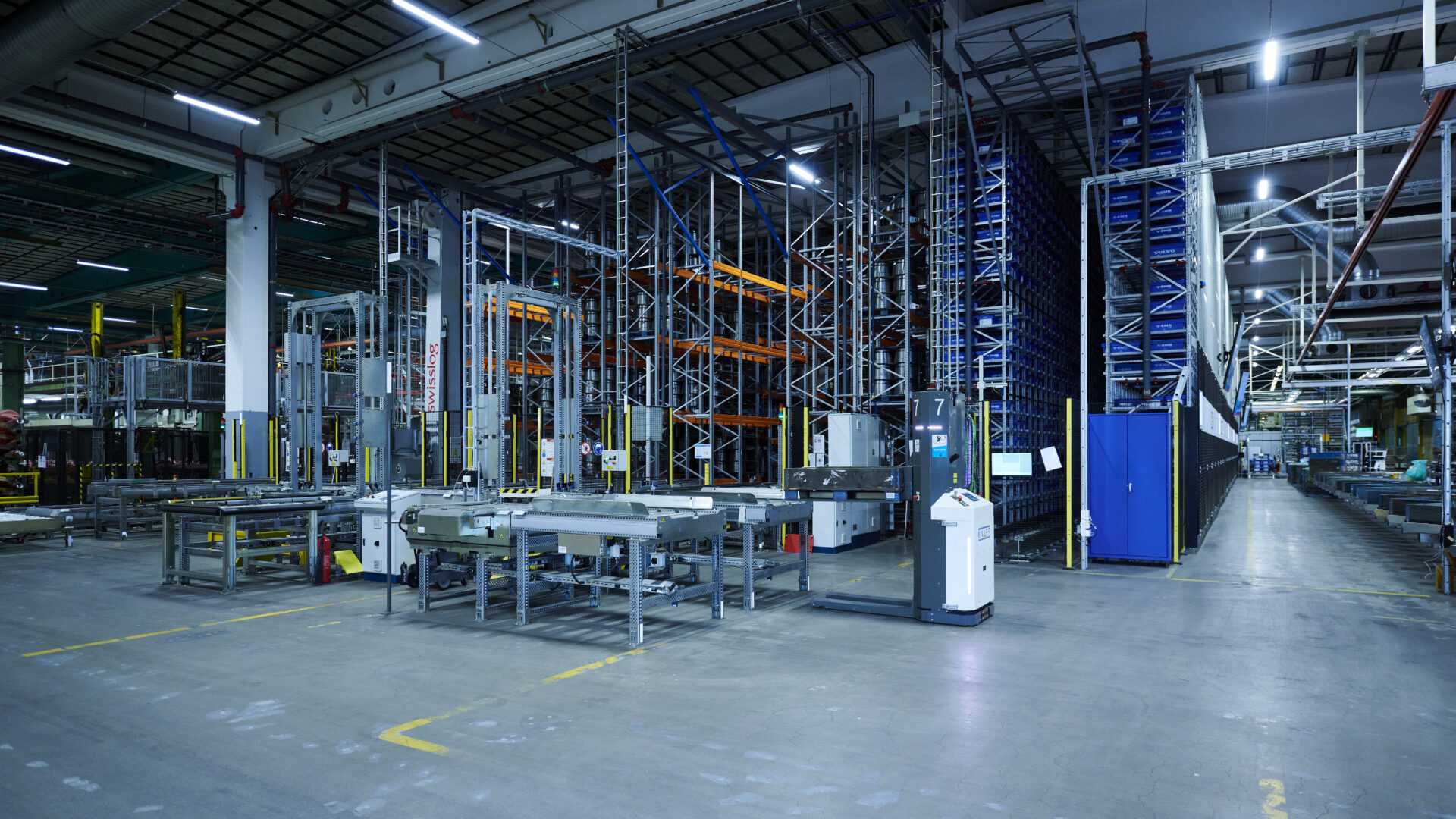
The Open Shuttle Fork then brings the pallet to one of three storage locations: the existing high-bay pallet racking in a separate hall, the new high-bay pallet racking or the small parts warehouse. In both pallet warehouses, the pallets are deposited on a conveyor, where they are once again scanned and checked before being put away by a stacker crane. In the small parts warehouse, pallets with containers are placed on a transfer location and then processed manually by an employee.
3 I Small parts putaway
Employees remove the containers, which come in two different sizes (400 x 300 mm / 16 x12 in and 600 x 400 mm / 24 x 16 in), from the pallet and place them on the conveyor one by one. The containers are automatically scanned and entered into the system. Afterward, they’re brought to the stacker crane, which puts them away into the system. When needed for production, the containers with the required parts are retrieved automatically.
4 I Picking
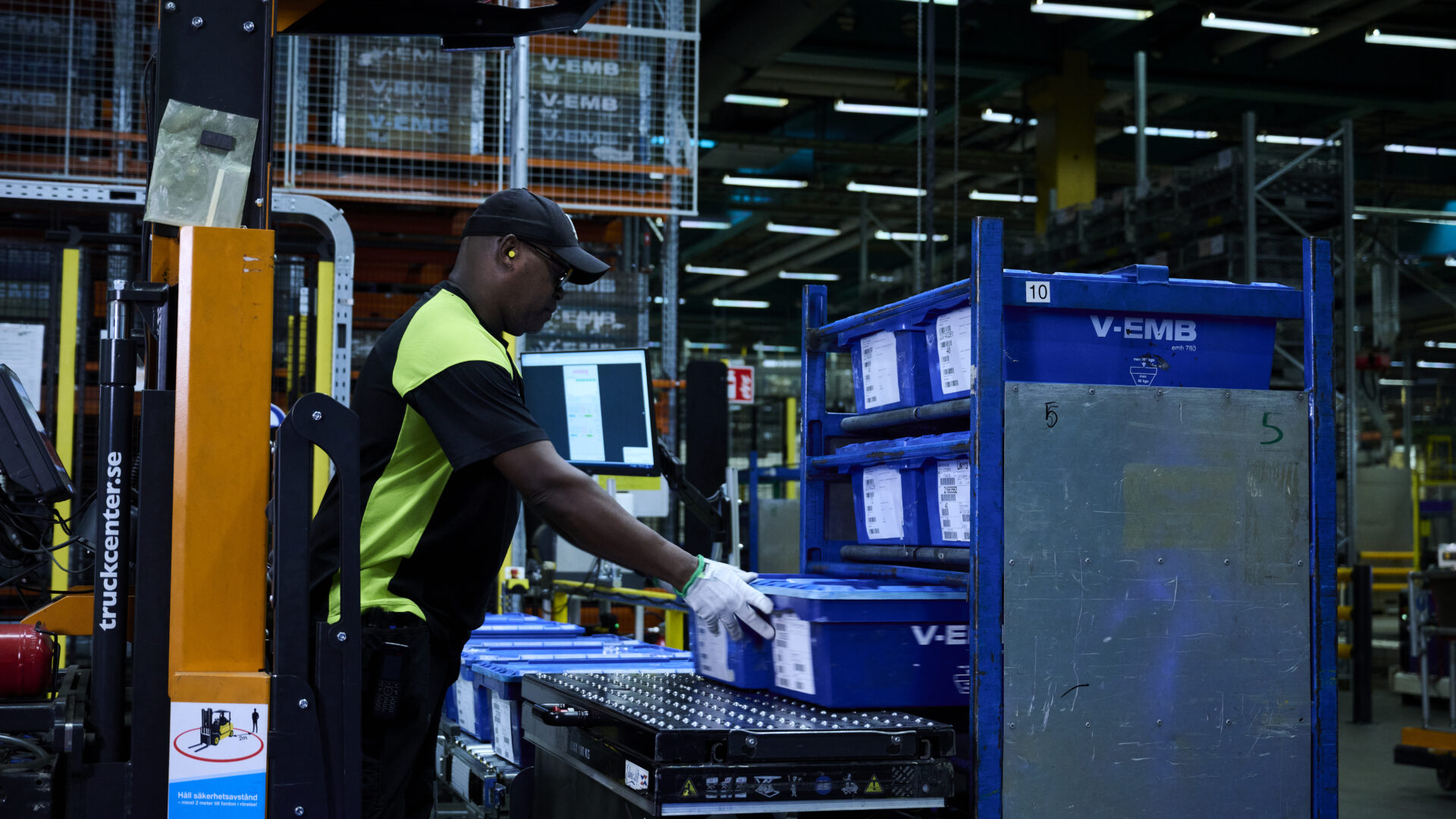
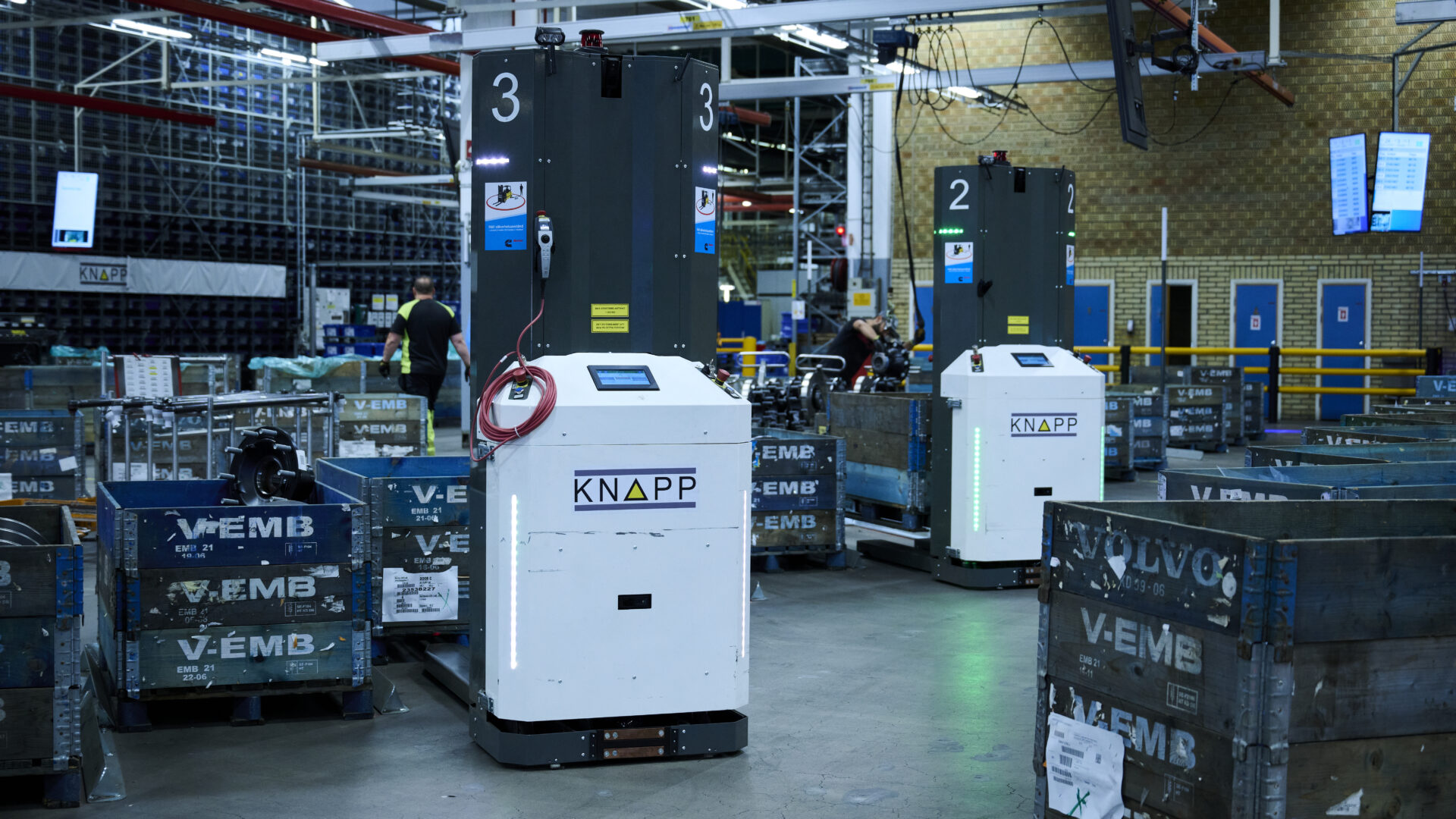
Pallets carrying goods from one of seven different material groups are requested for the picking area by the host system. The Open Shuttle Fork then brings the pallets from the high-bay pallet racking to one of 190 picking positions. The locations are arranged on a diagonal so that the Open Shuttles can drive in their own lane when dropping off pallets or taking pallets back with them – either empty or loaded with goods. Employees in the next lane use lifting aids to pick the required parts from the pallet. Then the parts are scanned and loaded onto a tugger train, which departs once fully loaded.
5 I Production logistics and goods-out
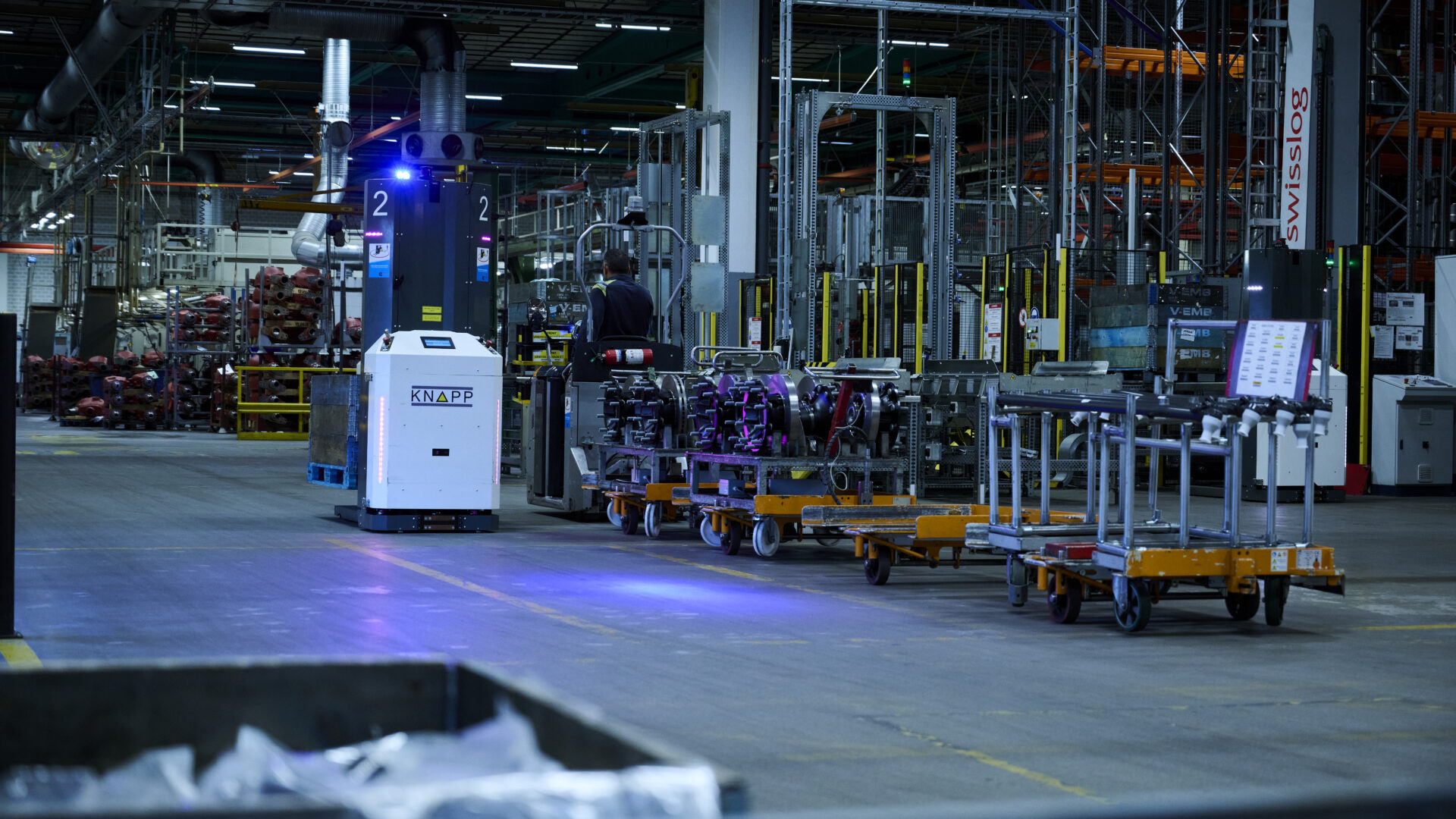
Tugger trains and specialized forklifts bring the required parts to the assembly line just in time. These parts include bulk materials, small parts from the warehouse and larger parts that were picked onto the tugger train. All the while, the vehicles share the floorspace with the Open Shuttles.
Cummins: AMRs and automated storage and retrieval systems for optimal pallet handling
Open Shuttle Fork AMRs perform key transport tasks along the entire goods flow, from goods-in to storage and supplying production:
1 I Goods-in
At goods-in, individual pallets with fitted frames are unloaded from the truck and placed on the conveyor, which brings them into the building. They’re measured and checked for damage before being automatically scanned, registered in the host system and allocated to their target. A route label is applied and the pallet undergoes a weight check. If a pallet fails, it’s diverted. If it passes, it’s scanned again and picked up by an Open Shuttle Fork for further transport.
2 I Storage
The Open Shuttle Fork then brings the pallet to one of three storage locations: the existing high-bay pallet racking in a separate hall, the new high-bay pallet racking or the small parts warehouse. In both pallet warehouses, the pallets are deposited on a conveyor, where they are once again scanned and checked before being put away by a stacker crane. In the small parts warehouse, pallets with containers are placed on a transfer location and then processed manually by an employee.
3 I Small parts putaway
Employees remove the containers, which come in two different sizes (400 x 300 mm / 16 x12 in and 600 x 400 mm / 24 x 16 in), from the pallet and place them on the conveyor one by one. The containers are automatically scanned and entered into the system. Afterward, they’re brought to the stacker crane, which puts them away into the system. When needed for production, the containers with the required parts are retrieved automatically.
4 I Picking
Pallets carrying goods from one of seven different material groups are requested for the picking area by the host system. The Open Shuttle Fork then brings the pallets from the high-bay pallet racking to one of 190 picking positions. The locations are arranged on a diagonal so that the Open Shuttles can drive in their own lane when dropping off pallets or taking pallets back with them – either empty or loaded with goods. Employees in the next lane use lifting aids to pick the required parts from the pallet. Then the parts are scanned and loaded onto a tugger train, which departs once fully loaded.
5 I Production logistics and goods-out
Tugger trains and specialized forklifts bring the required parts to the assembly line just in time. These parts include bulk materials, small parts from the warehouse and larger parts that were picked onto the tugger train. All the while, the vehicles share the floorspace with the Open Shuttles.
Open Shuttle Fork
Transport orders / day
Picking locations in the sequencing area
m² (44,000 ft²) Warehouse and sequencing area
Pallet locations
Container locations
Just-in-time production logistics by Open Shuttle Fork autonomous mobile robots
The heart of the solution is a fleet of 15 Open Shuttle Fork robots that transport pallets internally, completing up to 2,000 transport orders per day. The autonomous mobile robots efficiently connect goods-in, warehouse areas and picking, creating a seamless, automated goods flow that supplies production just in time.
The solution has also reduced the use of manual forklifts and increased warehouse safety at the location. Thanks to their autonomous navigation, the vehicles navigate mixed traffic with employees, tugger trains and forklift trucks safely. They can also be integrated into existing buildings without needing construction.
Easy to integrate
Flexibly adaptable
Maximum safety
KiSoft One and KiSoft FCS control processes at Cummins
Serving as the WMS, WCS as well as machine control system is KiSoft One, which is linked to the MES via an interface to Cummins’ host system. While KiSoft SCADA visualizes all system components, KiSoft FCS coordinates the transport orders and routes of the Open Shuttle Fork robots and provides a digital overview of the entire fleet. This allows Cummins to independently change processes, implement new stations and adjust the robots’ routes flexibly. Additional vehicles can also be integrated into the fleet as needed. During the project, KNAPP developed new functions designed to meet the specific requirements of the Lindesberg site.
KiSoft One
KiSoft FCS
KiSoft SCADA
Working towards solutions as equals
The successful implementation of the automation solution at Cummins’ plant in Lindesberg shows what’s possible with a close, innovative partnership. Both teams worked together to identify specific challenges and develop key functions for the software tailored to the complex processes on site. All the while, they kept their eyes on the prize: reaching the project targets and successfully going live. The solution always came first.
The result of this approach is a pioneering automation solution that has significantly increased safety on site as well as the efficiency of assembly and sequencing processes while maintaining the flexibility required to make implementing future changes or extensions simple.
What I appreciate most about KNAPP is the focus on achieving the result.
Raj Kamal
EU Automation Leader
Cummins Inc.
