Autonomous Mobile Robots (AMRs) for Efficient Container Transport
Containers, cartons and trays are the most common load carriers used today in manufacturing and logistics. Using autonomous mobile robots by KNAPP to automate is a choice for flexible, scalable container transport without the need for rigid infrastructure: from individual transport robots to entire fleets of integrated AMRs. The Open Shuttles connect warehouse, production and work stations providing transparent, end-to-end material flows.
Good reasons to automate container transport with AMRs
Container transport is one of the most common transport task carried out in many companies. The number of repetitive runs between the warehouse, production and the work stations requires a great deal of coordination and ties up valuable resources. Fluctuating material requirements, quick response times and reliable supply to processes put additional demands on the intralogistics.
Using AMRs to transport containers automates repetitive container movements, creates transparency in the flow of materials and increases supply reliability in manufacturing and logistics. AMRs evolved from the classic automated guided vehicle (AGV), and flexibly adapt to changes in processes, material flows and layouts.
What types of container transport are easily automated using AMRs?
The Open Shuttles automate the transport of different types of containers, cartons, trays and container stacks. Depending on the type of robot, different sizes, weights and load carriers can be combined in a solution.
Typical applications for container transport by AMRs:
Production supply
Transport between work stations
Picking
Supplying kanban racks and flow racks
Performing special and express transport tasks
Connecting to other warehouse areas
Are you looking for a flexible AMR solution to transport your containers?
We are here to help!
Why use Open Shuttles to transport containers?
Transport up to two load carriers at the same time
Pick up and deliver containers flexibly from both sides
Flexible transfer at different heights
Adapt your processes and travel paths independently
Seamless integration into storage and manufacturing systems
Scale up flexibly from a single robot to an entire fleet
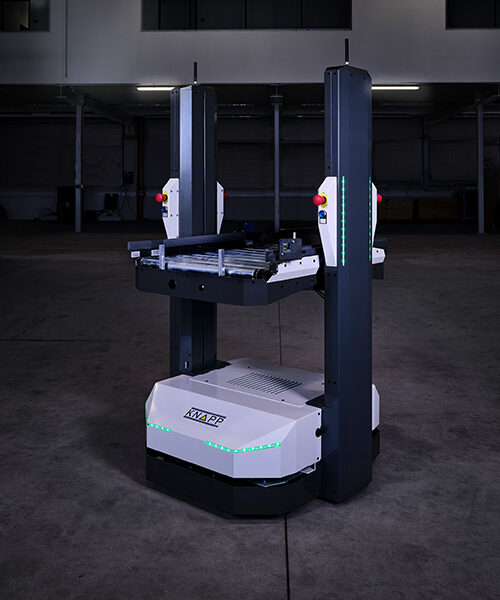
Open Shuttle 50 and 100: The optimal AMR solutions for containers
Every material flow requires something different in terms of performance, load carriers and processes. That’s why we offer several types of Open Shuttle – there is a right one for every application.
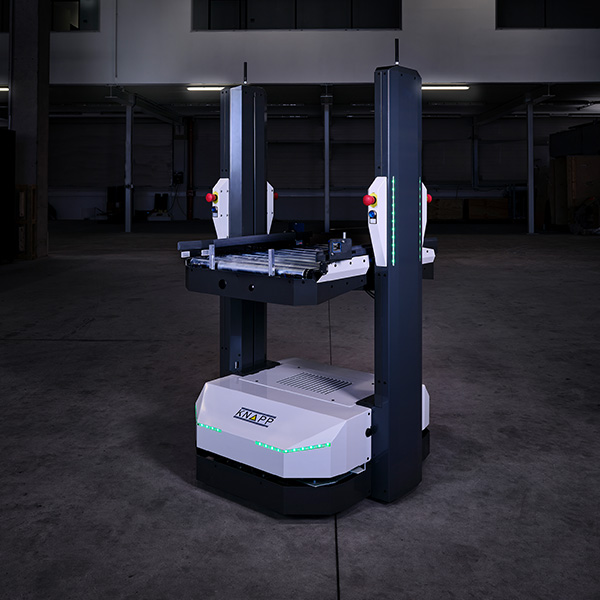
Here is an overview of the most important technical features:
 |
 |
|
|---|---|---|
Open Shuttle 50 |
Open Shuttle 100 |
|
| Load carriers | Small load carriers: Containers, cartons, trays, container stacks | Small load carriers: Containers, cartons, trays, container stacks |
| Max. number of load carriers | 2 | 2 |
| Largest load carrier size | 600 x 400 mm (24 x 16 in) | 900 x 650 mm (35 x 26 in) |
| Payload | 120 kg (265 lb) | 120 kg (265 lb) |
| Charging time | 60 min | 60 min |
| Battery runtime | 7 h | 7 h |
| Speed | Up to 1.5 m/s (4.92 ft/s) | Up to 1.5 m/s (4.92 ft/s) |
| Lifting height (pickup and delivery) | From 550 to 1,500 mm (22 to 59 in) | From 550 to 1,500 mm (22 to 59 in) |
| Safety functions | Blue light, brushes, top scanner, location sensor, optional 3D obstacle detection, active obstacle avoidance | Blue light, brushes, top scanner, location sensor, optional 3D obstacle detection, active obstacle avoidance |
| Certification | CE-certified, ISO 3691-4, VDA 5050, ESD protection | CE-certified, ISO 3691-4, VDA 5050, ESD protection |
Open Shuttle 50 and 100: The optimal AMR solutions for containers
Every material flow requires something different in terms of performance, load carriers and processes. That’s why we offer several types of Open Shuttle – there is a right one for every application. Here is an overview of the most important technical features:
Open Shuttle 50
AMR for container transport
| Open Shuttle 50 | |
| Load carriers | Small load carriers: Containers, cartons, trays, container stacks |
| Max. number of load carriers | 2 |
| Largest load carrier size | 600 x 400 mm (24 x 16 in) |
| Payload | 120 kg (265 lb) |
| Charging time | 60 min |
| Battery runtime | 7 h |
| Speed | Up to 1.5 m/s (4.92 ft/s) |
| Lifting height (pickup and delivery) | From 550 to 1,500 mm (22 to 59 in) |
| Safety functions | Blue light, brushes, top scanner, location sensor, optional 3D obstacle detection, active obstacle avoidance |
| Certification | CE-certified, ISO 3691-4, VDA 5050, ESD protection |
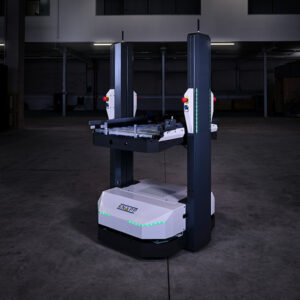
Open Shuttle 100
AMR for container transport
| Open Shuttle 100 | |
| Load carriers | Small load carriers: Containers, cartons, trays, container stacks
|
| Max. number of load carriers | 2 |
| Largest load carrier size | 900 x 650 mm (35 x 26 in) |
| Payload | 120 kg (265 lb) |
| Charging time | 60 min |
| Battery runtime | 7 h |
| Speed | Up to 1.5 m/s (4.92 ft/s) |
| Lifting height (pickup and delivery) | From 550 to 1,500 mm (22 to 59 in) |
| Safety functions | Blue light, brushes, top scanner, location sensor, optional 3D obstacle detection, active obstacle avoidance |
| Certification | CE-certified, ISO 3691-4, VDA 5050, ESD protection |
Compare all Open Shuttle solutions at a glance.
Discover more about the functions and technical data of our AMRs.
How are AMR fleets controlled during container transport?
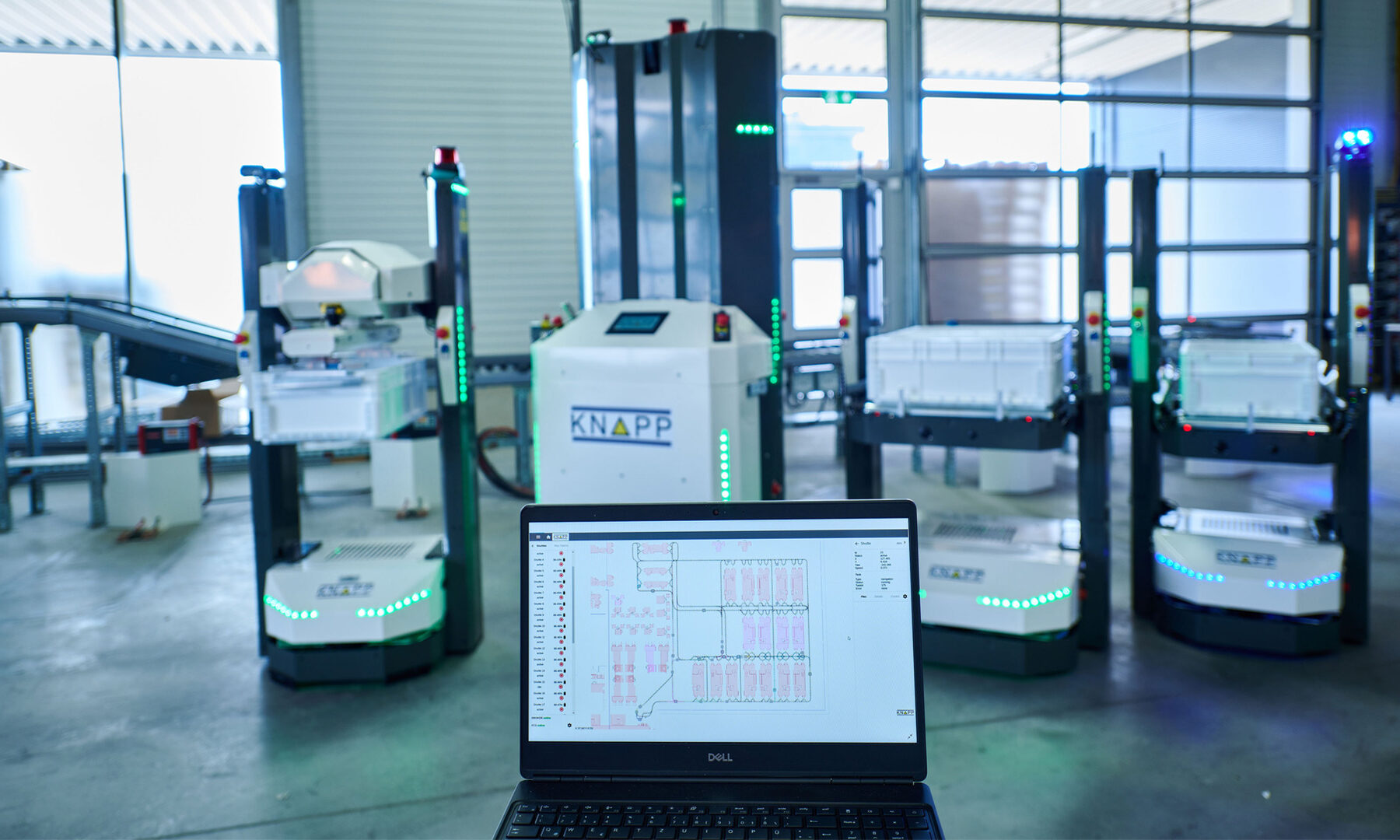
KiSoft FCS controls and coordinates all the Open Shuttles centrally. The fleet management software distributes transport orders automatically, optimizes the travel paths and makes the flow of materials transparent at all times. The autonomous vehicles are easily integrated into existing warehouse and production environments and can be combined with conveyors, kanban systems, flow racks and storage solutions. Layouts, processes and travel paths are flexibly adjusted and tested in the digital twin before they are implemented, allowing a fast, controlled and step-by-step start to automation.
Learn more about our intelligent software for AMRs!
Successful customer projects featuring automated container transport
Open Shuttles automate container transport in different sectors, such as in the automotive industry, in electronics manufacturing, in machine construction and in the metalworking and plastics industries. These references demonstrate how flexibly the AMRs can be used in manufacturing and logistics environments.
Reference: SICK Hungary
You are currently viewing a placeholder content from YouTube. To access the actual content, click the button below. Please note that doing so will share data with third-party providers.
More InformationOrders were increasing at SICK, making the reliable supply of containers and materials to four production halls necessary. KNAPP implemented a solution for this featuring the Open Shuttle 100, 27 in total, as well as 30 flow racks. Today, the autonomous mobile robots provide just-in-time supply to production, ensuring end-to-end material flow between storage and assembly. When needed, this solution can be flexibly expanded.
Reference: Digmesa
You are currently viewing a placeholder content from YouTube. To access the actual content, click the button below. Please note that doing so will share data with third-party providers.
More InformationWhile they were combining locations, Digmesa AG wanted to automate the supply to their injection molding machines and free employees from manual transport tasks. KNAPP implemented a solution within four months featuring an Open Shuttle 100, which was soon expanded by a second AMR. The AMRs transport empty containers to the production machines and transfer the completed pieces automatically to the flow racks. The result: A flexible supply to production, optimized inventory and a solution that can grow at any time.
Successful customer projects featuring automated container transport
Open Shuttles automate container transport in different sectors, such as in the automotive industry, in electronics manufacturing, in machine construction and in the metalworking and plastics industries. These references demonstrate how flexibly the AMRs can be used in manufacturing and logistics environments.
Reference: SICK Hungary
You are currently viewing a placeholder content from YouTube. To access the actual content, click the button below. Please note that doing so will share data with third-party providers.
More InformationOrders were increasing at SICK, making the reliable supply of containers and materials to four production halls necessary. KNAPP implemented a solution for this featuring the Open Shuttle 100, 27 in total, as well as 30 flow racks. Today, the autonomous mobile robots provide just-in-time supply to production, ensuring end-to-end material flow between storage and assembly. When needed, this solution can be flexibly expanded.
Reference: Digmesa
You are currently viewing a placeholder content from YouTube. To access the actual content, click the button below. Please note that doing so will share data with third-party providers.
More InformationWhile they were combining locations, Digmesa AG wanted to automate the supply to their injection molding machines and free employees from manual transport tasks. KNAPP implemented a solution within four months featuring an Open Shuttle 100, which was soon expanded by a second AMR. The AMRs transport empty containers to the production machines and transfer the completed pieces automatically to the flow racks. The result: A flexible supply to production, optimized inventory and a solution that can grow at any time.
Would you like to learn more about our other AMR products?
Discover our AMRs for pallet and magazine transport!
FAQs on container transport with AMRs
How fast can the KNAPP AMRs start operating?
Thanks to flexible software and easy integration, the Open Shuttles can start operating very quickly. Layouts and processes are digitally mapped and can be expanded step by step.
Can several Open Shuttles be operated as a fleet?
Yes, they can. The fleet management software KiSoft FCS controls, coordinates and manages fleets whether large or small. As a result, a few vehicles can be operated just as efficiently as an extensive AMR fleet.
Can the Open Shuttles be operated with other warehouse vehicles in mixed fleets?
Yes, they can. Different Open Shuttle types can be run in the same fleet and centrally controlled. These means containers, pallets and special transport tasks can be flexibly coordinated. Manual floor-based material handling equipment can also be integrated into the fleet and managed centrally.
Can processes and travel paths for the AMRs be adjusted later on?
Yes, they can. Processes, stations and travel paths can be flexibly adapted even after startup. With the digital twin of KiSoft FCS, all the changes can be tested in advance. After the corresponding training, employees can make many adjustments independently.
How does the KNAPP AMR pick up a container?
The Open Shuttle for container transport uses an automated load-handling device, enabling it to transfer loads independently. The robot picks up small load carriers, cartons and trays from transfer stations or racks. Precision sensors allow the AMRs to interface safely with roller conveyors and other conveyor systems.
What sizes of containers can the Open Shuttles transport?
The Open Shuttle 50 transports containers, cartons and trays measuring up to 600 x 400 mm (24 x 16 in). When transporting two load carriers at the same time, the maximum size is 300 x 400 mm (12 x16 in). The Open Shuttle 100 transports load carriers up to 900 x 650 mm (35 x 26 in) or with two containers up to 650 × 450 mm (26 x 18 in).
Do autonomous mobile robots require structural changes?
No. The Open Shuttles can be integrated into existing warehouse and production environments. The only real requirement is a minimum aisle width for the travel paths. You can find all the information in our product folder.
How are AMRs different from conventional conveyor systems?
Conventional conveyors are installed permanently and are designed for material flows that stay constant. The Open Shuttle AMRs move about freely in spaces and adapt flexibly to changes in processes, work stations or production layouts. Implementing new transfer points, travel paths or material flows is easy without any need for major reconstruction. This makes AMRs particularly suitable for the dynamic environments in production and logistics as well as for container transport with frequently changing requirements.
Can conveyors and AMRs be used together?
Yes. Open Shuttles can be seamlessly combined with existing conveyor systems. For example, they can transport containers between the conveyor system and work stations, warehouse areas or production lines, ensuring non-stop material flow. This way, existing systems can stay in service and additional transport processes can be flexibly automated.
