Autonomous Mobile Robots (AMR) for Warehouse Automation
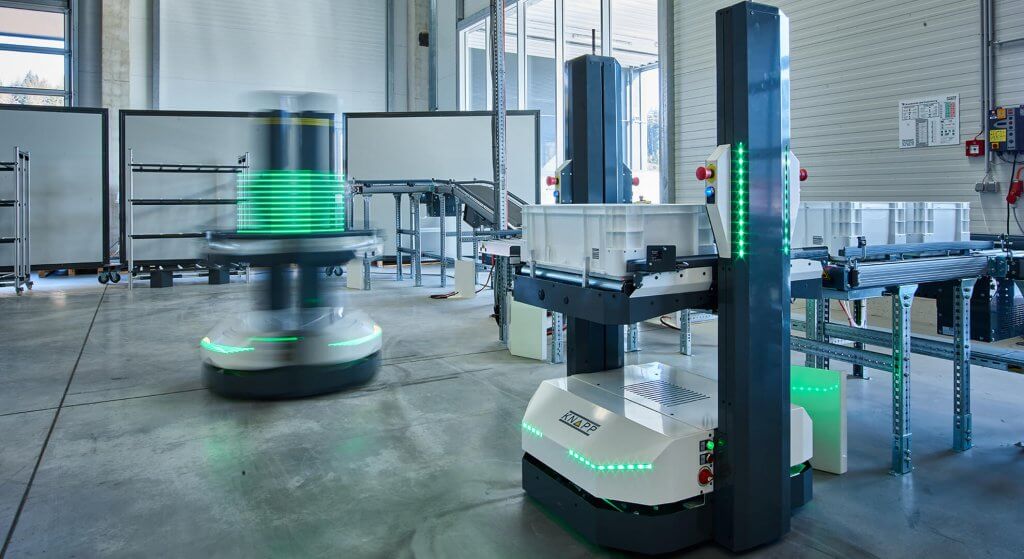
Over the years, many different names have been coined for flexible transport systems on the market, from automated guided vehicle (AGV), autonomous mobile robot (AMR) to autonomous intelligent vehicle (AIV). Autonomous mobile robots such as KNAPP’s Open Shuttles are autonomous and intelligent transport robots that help bring flexibility to the design of logistical processes. They transport different load carriers within a facility, such as containers, pallets and magazines.
Advantages of our autonomous mobile robots
Intelligence
Greater efficiency and productivity
Transparency
Configurability
Reduced costs
Save space
Flexibility and scalability
Improved safety
Future-proof
Intelligent AMR robots for flexible warehouse logistics
Are you looking to use automation to interconnect different areas of your warehouse and production? Do you need your goods to arrive at the right location in the right quantity and at the right time – while reserving the ability to make changes flexibly as needed?
Our autonomous mobile robots, or automated guided vehicles, make all this possible – automatically, with ease and efficiency. Infused with intelligent software, our Open Shuttles reliably carry out transport orders autonomously, navigating warehouse space freely while identifying and avoiding obstacles. This means they can be integrated in existing warehouse environments – no extra infrastructure needed. Our AMR robots offer maximum flexibility while increasing productivity and freeing up employees for value-generating tasks. Our Open Shuttles AMRs are the smart, flexible way to automate your warehouse-internal material flow.
You are currently viewing a placeholder content from YouTube. To access the actual content, click the button below. Please note that doing so will share data with third-party providers.
More InformationHow do AGVs and AMRs function?
Automated guided vehicle systems (AGVs) have developed from fixed path transporters navigating with optical or magnetic guiding lines into intelligent autonomous mobile robots (AMRs). Early on in the development of the technology, fleets were controlled centrally, but today AMRs navigate independently. They create a digital map and identify obstacles in real time, actively avoiding them – all without human interaction. Sensors, cameras and laser scanners provide data on the surroundings that is analyzed by the integrated software which calculates the optimal path. The result? Flexible navigation, efficient material flow and maximal use of space.
Find out more about the differences between the systems in our blog “AGV vs. AMR: Two Automated Guided Vehicle Systems, Compared”.
Looking for an AMR or AGV for your warehouse?
Find out more about Open Shuttles by KNAPP!
AMR robots are the perfect solution for logistical challenges
Change is omnipresent in industry, whether due to ever-changing environmental and market situations, cost pressure or shortages in resources or qualified workers. To compensate for this, a quick, flexible solution to lower costs and boost efficiency is needed. With our Open Shuttles autonomous mobile robots, you can immediately tackle today’s challenges with ease. And if you want to make sure the system works in your environment, simply test the processes and layout beforehand to make implementation times even shorter.
Types of autonomous mobile robots
Thanks to their incredible flexibility and versatility, our autonomous mobile robots can be used in many areas of application. We offer different models to ensure that your requirements are covered:
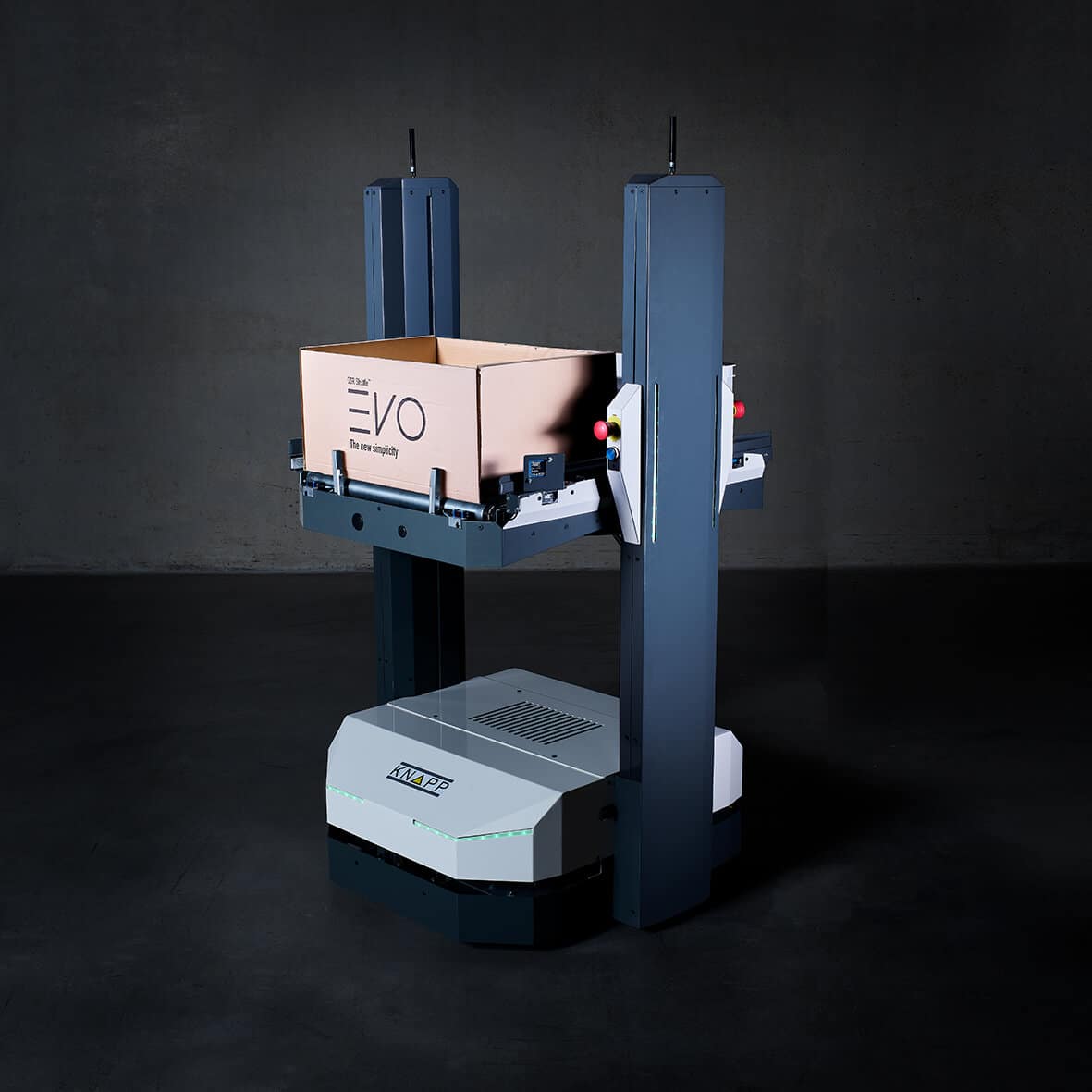
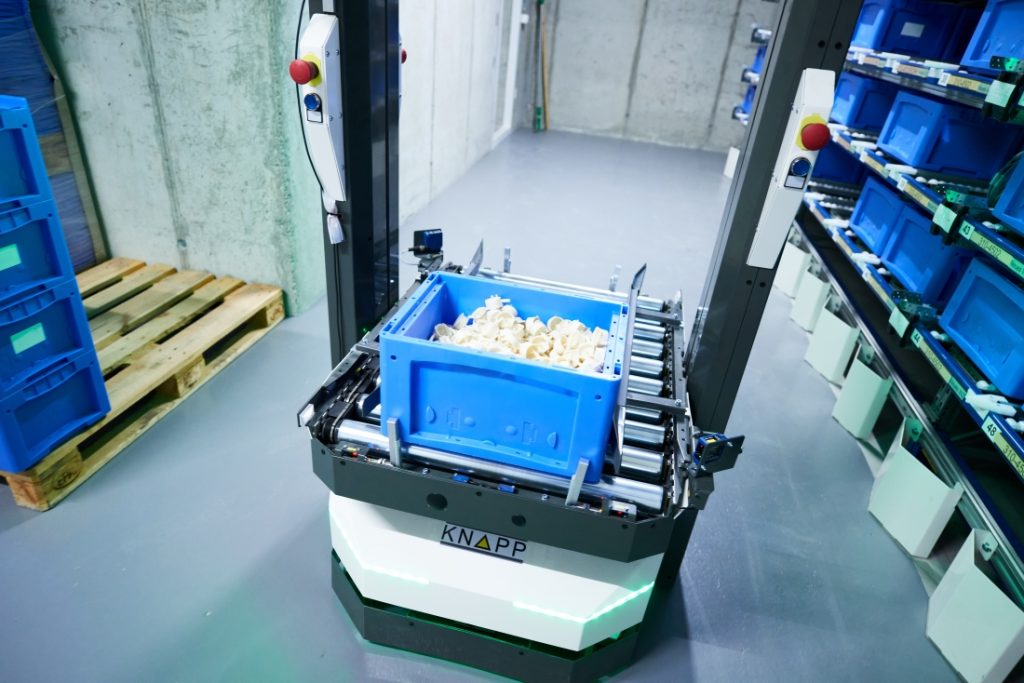
Open Shuttle: AMR for container transport
for transporting containers, cartons and trays
Payload of up to 120 kg (265 lb)
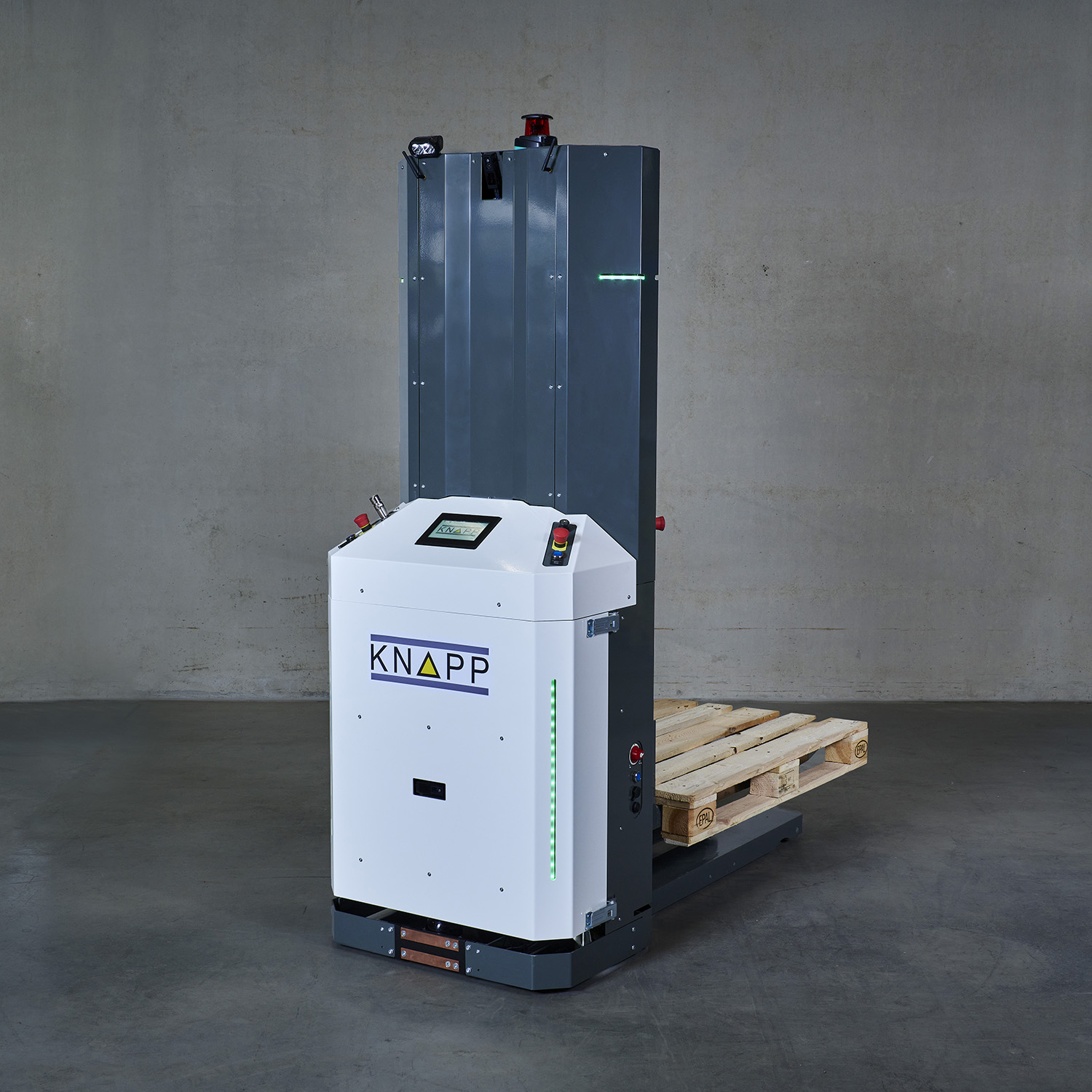
Open Shuttle Fork: AMR for pallet transport
for transporting pallets and special load carriers
Payload of up to 1,300 kg (2,866 lb)
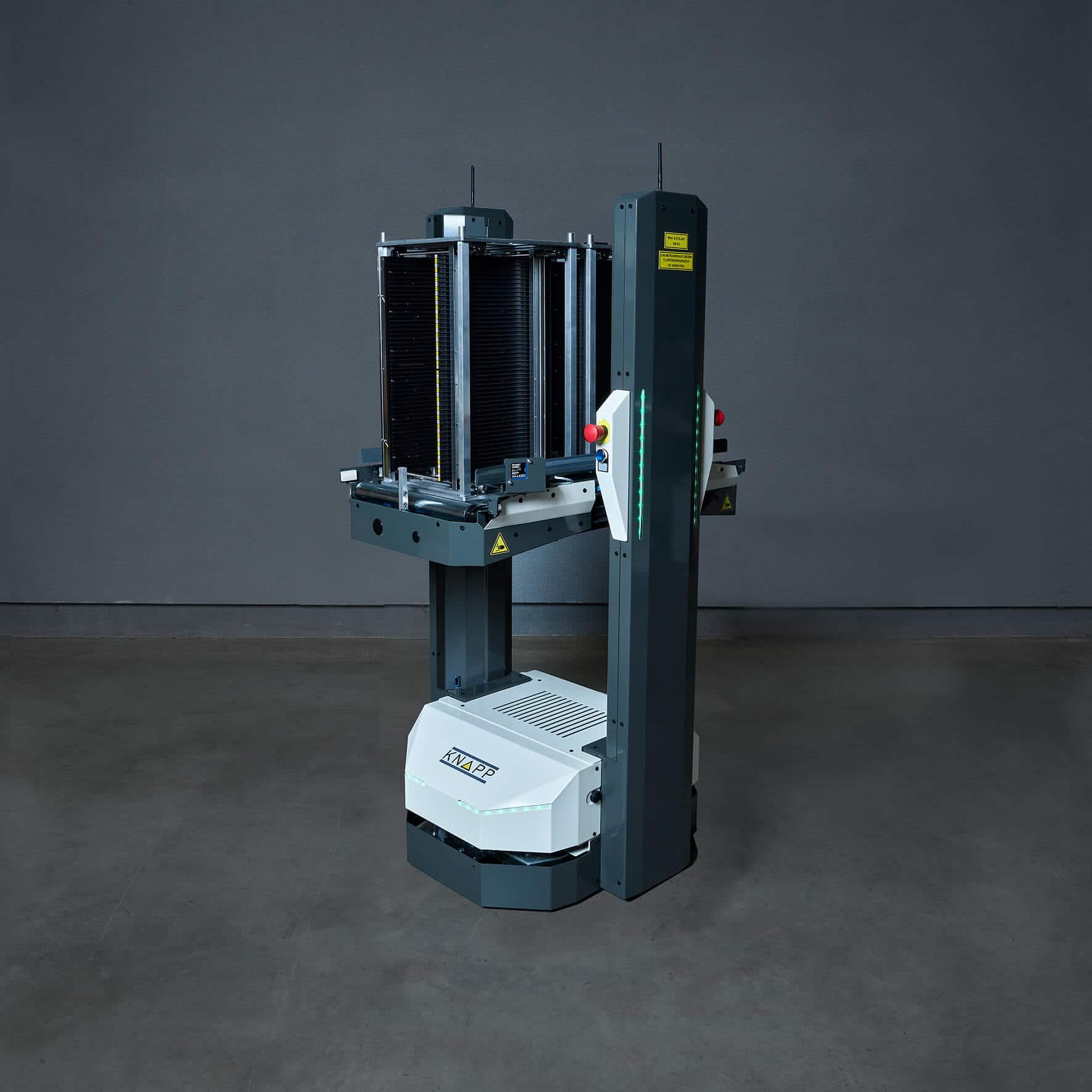
Open Shuttle: AMR for the electronics sector
For transporting printed circuit board magazines as well as containers, cartons and trays
Payload of up to 50 kg (110 lb)
Various applications of autonomous mobile robots
Our autonomous mobile robots are a great alternative to stationary container and pallet conveyors. They connect all the various storage areas simply and flexibly, handling various tasks:
- Internal transport with mixed fleets in one system
- Supplying work stations and production lines just in time
- Connecting production machines
- Supporting the picking process
- Transport jobs for packing and repacking stations
- Connecting storage systems and augmenting existing conveyor systems
- Supplying kanban racks and flow racks
- Performing special and express transport tasks
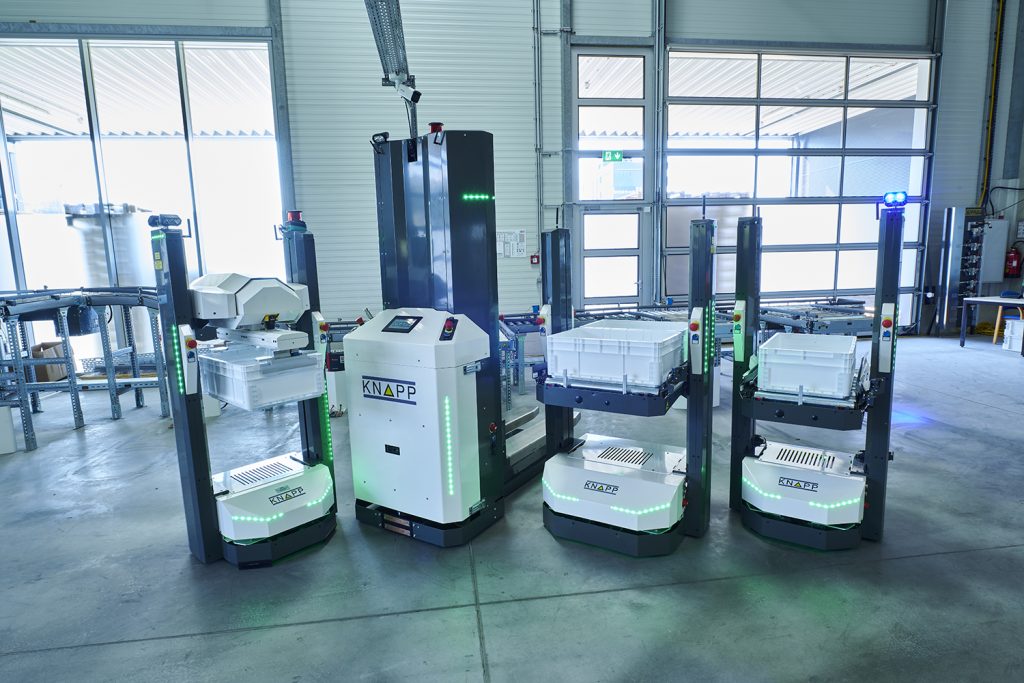
The Open Shuttles are great in combination with other systems. They can transfer loads to kanban or flow racks, to conveyors as well as directly to storage systems such as an Evo Shuttle, AeroBot or InduStore.
Sectors
The Open Shuttles by KNAPP are versatile autonomous mobile robots (AMRs) that function not only as a stand-alone system, but also as part of an integrated overall logistics solution for warehouse or production operations. Automate your material flow in the sectors:
- Manufacturing and production (automobile industry, electronics manufacturing, machine construction, and more)
- Chemical and plastics manufacturing
- Retail and store logistics
- Food and beverage industry
- Pharmaceutical industry and medical technology
- Warehousing and logistics (e-commerce and DCs)
- Textiles and fashion industry
Scale your Open Shuttle fleet to meet your needs
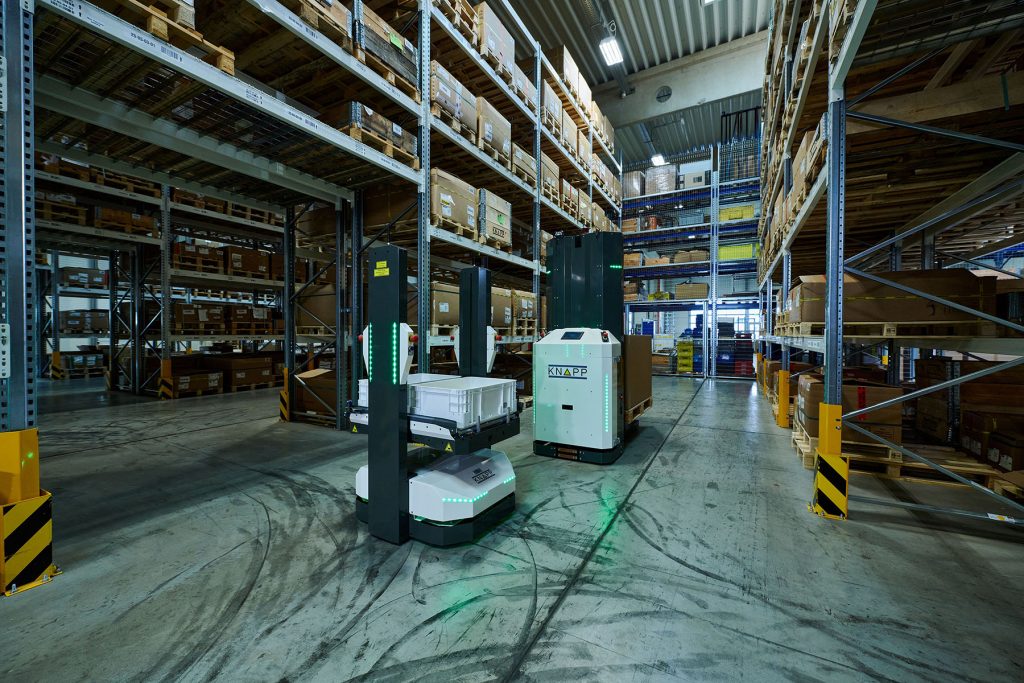
You decide what your Open Shuttle fleet should look like. Whether you have two shuttles or over 100, the size of the fleet can be adapted to your current situation and changed at any time. Our range of AMR models with different load-handling devices can also be combined to form a versatile fleet.
Our intelligent software makes it possible to efficiently visualize and control all transport resources. This also allows our robots to function in combination with other manual warehouse vehicles.
How do KNAPP’s autonomous mobile robots work?
Find out more here.
Autonomous mobile robots: Add-ons for Open Shuttles
Our autonomous mobile robots can be flexibly tailored to your needs using our innovative add-ons.
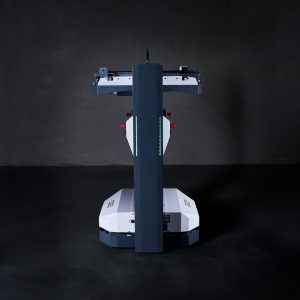
Integrated lifter
Our Open Shuttles can be equipped with a lifter to retrieve and deliver loads at different heights – from 550–1,500 millimeters (21.65 in–59.06 in) or from 0–1,200 millimeters (0–47.24 in) – and transfer them to different conveyors. This provides more flexibility when designing processes.
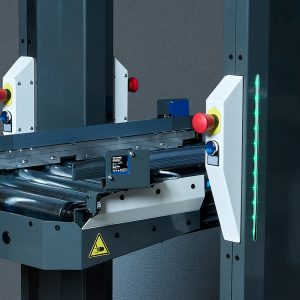
Integrated width adjustment
The load-handling device (LHD) can also be equipped with width adjustment, allowing the Open Shuttle to automatically adapt its LHD to the width of the load carrier. With the integrated lifter and width adjustment, the Open Shuttle flexibly adapts to both the height and the width of its load.
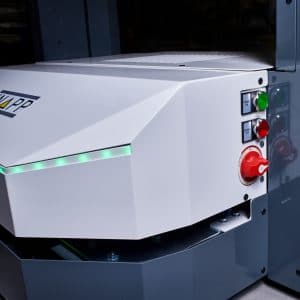
Indicator lights and sensors
Additional indicator lights and sensors increase the Open Shuttle’s visibility in warehouse areas with frequent traffic. To meet your requirements, our AMRs can be equipped as needed.
6 steps get your AMR up and running
At KNAPP, we know that every second is valuable and what system downtime means for your business, which is why we made integrating an AMR as quick and easy as possible. The entire installation can be done during ongoing operation. You can automate your internal transport in just 6 steps.
How to install the Open Shuttle AMR robots in 6 easy steps >
Become an integrator for our autonomous mobile robots!
Open Shuttle – the new flexibility.
Find out which companies bank on our Open Shuttles:
You are currently viewing a placeholder content from YouTube. To access the actual content, click the button below. Please note that doing so will share data with third-party providers.
More InformationSwiss company Digmesa develops, manufactures and distributes flow measurement devices. Taking only four months to implement, the solution initially included one Open Shuttle autonomous mobile robot and was later expanded.
You are currently viewing a placeholder content from YouTube. To access the actual content, click the button below. Please note that doing so will share data with third-party providers.
More InformationB&R Industrial Automation GmbH is a leading global provider of automation solutions and is part of the ABB Group. At their Austrian site, autonomous mobile robots (AMRs) combine perfectly with a shuttle storage system and ergonomic work stations.
You are currently viewing a placeholder content from YouTube. To access the actual content, click the button below. Please note that doing so will share data with third-party providers.
More InformationMagna is one of the world’s largest automotive suppliers. Many premium OEM manufacturers have their wing mirrors manufactured at the Assamstadt facility. Magna uses a shuttle storage system in combination with autonomous mobile robots for their production logistics.
You are currently viewing a placeholder content from YouTube. To access the actual content, click the button below. Please note that doing so will share data with third-party providers.
More InformationIn Sattledt, Fronius manufactures welding systems for industry, inverters for photovoltaic systems and charging devices for warehouse vehicles. Fronius uses autonomous mobile robots (AMRs) to transport pallets and containers in about 70,000 m² (~753,470 ft²) manufacturing space.
Your AMR comes with options to buy, rent and more
Our Open Shuttles can be acquired in a number of different ways. You have the following options depending on your needs and requirements:
RENTAL MODEL
PURCHASE
AUTOMATION PROJECT
DEMO SETUPS
What costs are involved with autonomous mobile robots?
Find out how fast an AMR investment pays off.
FAQs on autonomous mobile robots (AMRs) and automated guided vehicles (AGVs)
Automated guided vehicles follow specified, pre-set routines and processes, while autonomous mobile robots process information from their environment and autonomously make decisions. This blog post provides more information on the topic of AMRs and AGVs:Two Automated Guided Vehicle Systems, Compared
- Internal transport
- Supplying work stations and production lines
- Connecting production machines
- Supporting the picking process
- Performing special and express transport tasks
- Transport jobs for packing and repacking stations
- Connecting directly to storage systems
- Complementing an existing conveyor system
- Supplying kanban, flow and pallet racks
The space required for an AMR system depends on the size of the fleet and the required throughput. The Open Shuttles by KNAPP are some of the most space-effective on the market. For more information, get in touch with us at: kin.sales@knapp.com
At KNAPP, we offer three different ways to integrate:
- The AMRs communicate directly with the customer’s higher-level system and receive transport orders from it (SAP integration available).
- The AMRs receive transport orders from the machine control systems in the form of sensor signals.
- The AMRs receive transport orders directly from employees, who generate the orders on a user-friendly interface.
The base price for an Open Shuttle starts at about 45,000 euros and will vary depending on the price and the equipment needed. There are also expenses associated with integration which depend on the project.
Depending on the complexity and number of vehicles, delivery times of three months or more can be expected.
After completing training, every customer can independently change maps, processes, and procedures using the user interface.
Yes. The Open Shuttles can be used and installed without a warehouse system or other product.
At KNAPP, we offer transfer stations in the form of conveyors and flow racks for containers as well as the equipment necessary for efficient maintenance.
