
AMR software controls and coordinates autonomous mobile robots (AMRs) in manufacturing and logistics. The software makes it possible to manage transport orders, to deploy AMRs as they are needed, to coordinate the flows of traffic and to integrate fleets of robots into enterprise systems such as ERP, WMS or MES. Modern AMR software controls various functions from the autonomous navigation of individual robots to the central management of fleets. But how do these different software levels work together and what should companies pay attention to in the selection process? In this blog post, we explain the most important functions, the architecture and the interface possibilities for AMR software in manufacturing and logistics.
You are currently viewing placeholder content from Google Preferred Sources. To access the actual content, click the button below. Please note that this will result in data being shared with third parties.
More Information
Industry Solutions
Key Takeaways
What does AMR software architecture look like?
There are several levels in the software for autonomous mobile robots, ranging from vehicle control to the integration in enterprise systems. Every level handles a specific task – from creating a transport order to the autonomous navigation of the vehicle. The following overview shows which tasks are handled by the different levels and how they work together:
| Level | Task | Typical functions |
| Enterprise systems and order sources | Planning and control of material and transport requirements | ERP/SAP, WMS, WES, MES or direct triggering of transport orders |
| Orchestration and fleet management | Coordination of the robot fleet and transport orders | Order assignment, prioritization, traffic management, route planning, energy management, monitoring, analytics |
| Integration and communication layer | Data exchange between enterprise systems, fleet management and vehicles | Interfaces, communication standards, vehicle standards such as VDA 5050, data exchange |
| Local vehicle intelligence | Autonomous and safe operation of the vehicle | Navigation, obstacle detection, safety, vehicle condition |
| Physical level | Execution of material transport | AMR/AGV, charging stations, docks, lifts, conveyors |
AMR software architecture with enterprise systems, fleet management, interfaces and local vehicle control
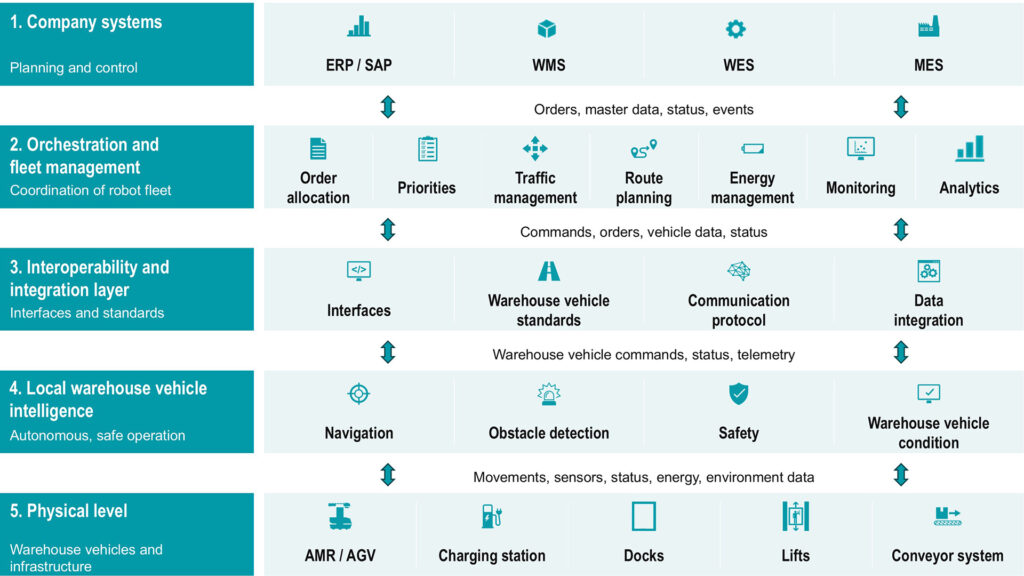
The performance of an AMR solution is not determined by the robots only, but by the software architecture behind it. It combines transport orders, vehicles and enterprise system into an end-to-end material flow.

How does AMR software process a transport order?
For the autonomous mobile robot to deliver material to the right location at the right time, different software components have to mesh optimally. From the request for transport to its successful execution, every order goes through several steps:
1. Transport is required
2. Order is created
3. Vehicle is selected
4. Travel path is planned
5. Transport is executed
6. Return status message is sent
How do autonomous mobile robots navigate?
To navigate autonomously, AMRs are equipped with sensors and software enabling them to read their environment, determine their position and respond to changes.
Sensors and environment perception
The foundation of autonomous navigation is the ability to read the environment. AMRs use different types of sensors to continuously perceive their surroundings and to recognize changes. Typical sensor technologies include:
Using the recorded data, the robot is able to detect people, obstacles, traffic paths and relevant environmental markers. From this data, a digital map of the environment arises forming the basis for navigation and movement decisions.
SLAM and localization
For AMRs to know where they are, they need to continuously determine their position. This process is known as localization. Most autonomous mobile robots such as our Open Shuttles use SLAM (simultaneous localization and mapping) in order to:
In comparison with conventional automated guided vehicles (AGVs), AMRs navigate without guide lines, magnetic strips or other permanent infrastructure.

Route planning and obstacle avoidance
As soon as a transport order is ready and the destination is known, the fleet management system plans a suitable path, accounting for factors such as distance, traffic rules, no-go areas and current obstacles. As it travels, the AMR monitors its environment continuously.
Should the vehicle detect an obstacle on its planned path, the AMR flexibly adjusts its movement by slowing down, stopping or avoiding the obstacle by going around it. If an alternative route is necessary, the fleet management system determines a new one.
Local navigation versus central fleet control
When it comes to AMR navigation, it’s common to differentiate between local vehicle intelligence and central fleet management. The local robot software decides how a robot reliably reaches its destination. The fleet management system decides which robot will handle an order and efficiently coordinates the fleet of robots operating within the facility.
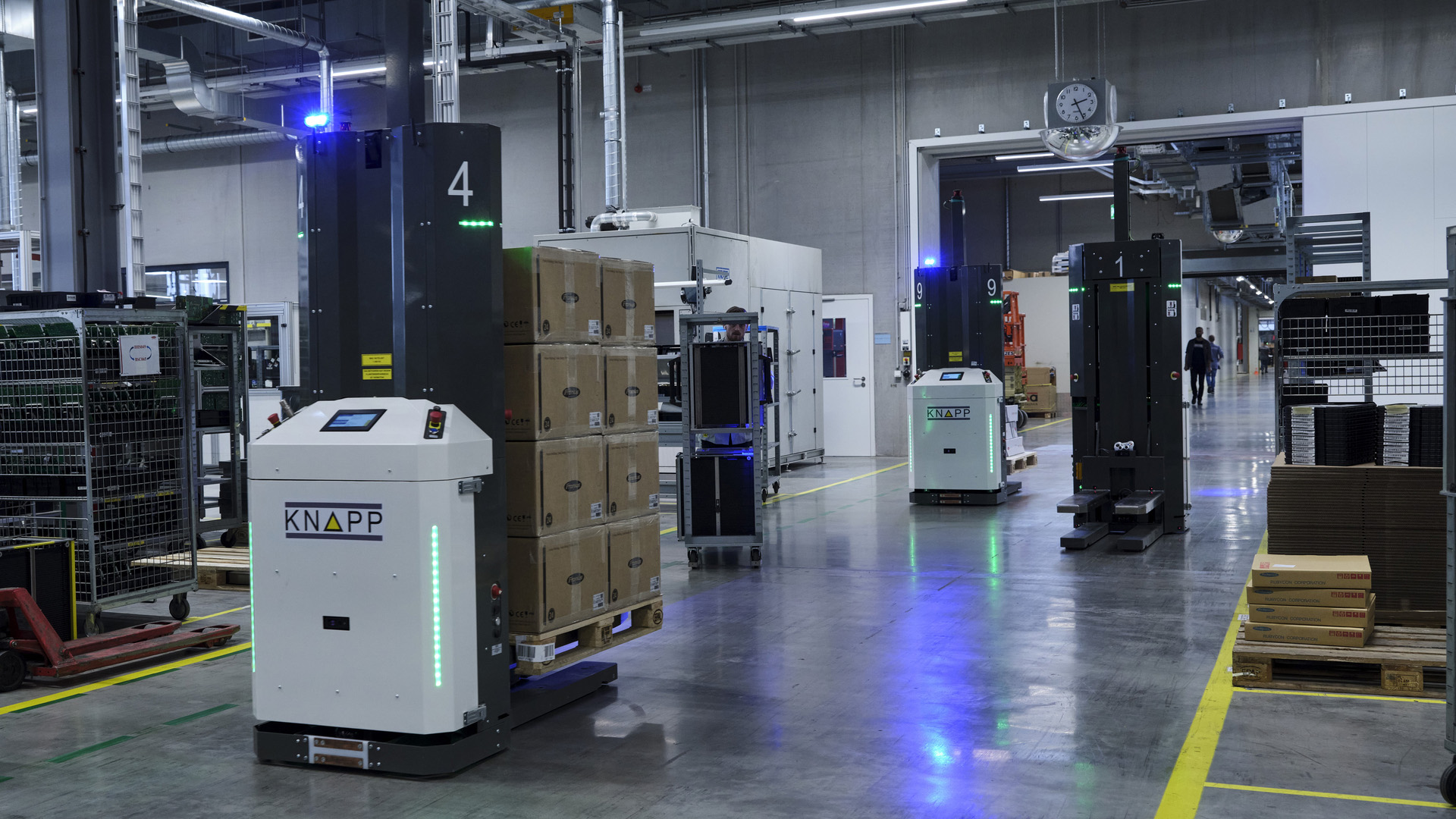
Which tasks are handled by the AMR fleet management software?
While the software of the individual robot is responsible for robot navigation, the fleet management software coordinates the entire AMR fleet. It ensures that transport orders are efficiently carried out, robots are optimally deployed and the flow of traffic through the facility is controlled reliably. The tasks in detail include:
Order assignment
Traffic management
Energy management
Monitoring and transparency
Incident management
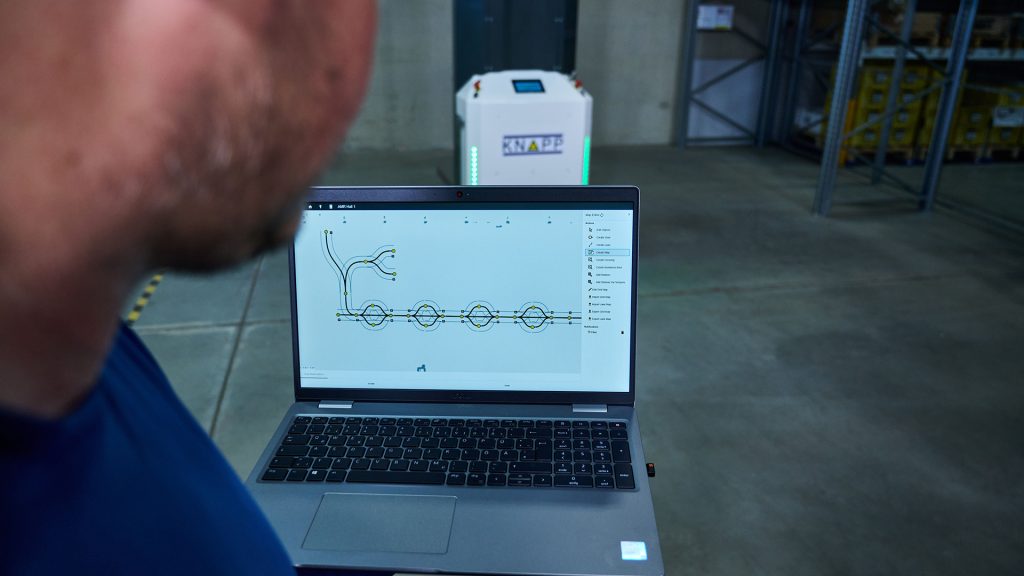
With KiSoft FCS, KNAPP offers a fleet management software that controls and coordinates the autonomous mobile robots like the Open Shuttles and other material handling vehicles optimally.
Learn more about the intelligent control of your fleet:
Order assignment at Brødrene Dahl
At Brødrene Dahl, KiSoft FCS coordinates the transport orders of eight Open Shuttle Fork robots. Employees can initiate transport tasks directly using a graphical user interface. In addition, trained technicians can independently expand the fleet.
Learn more in the video:
Brødrene Dahl | Autonomous mobile robots (AMRs) for pallet transport
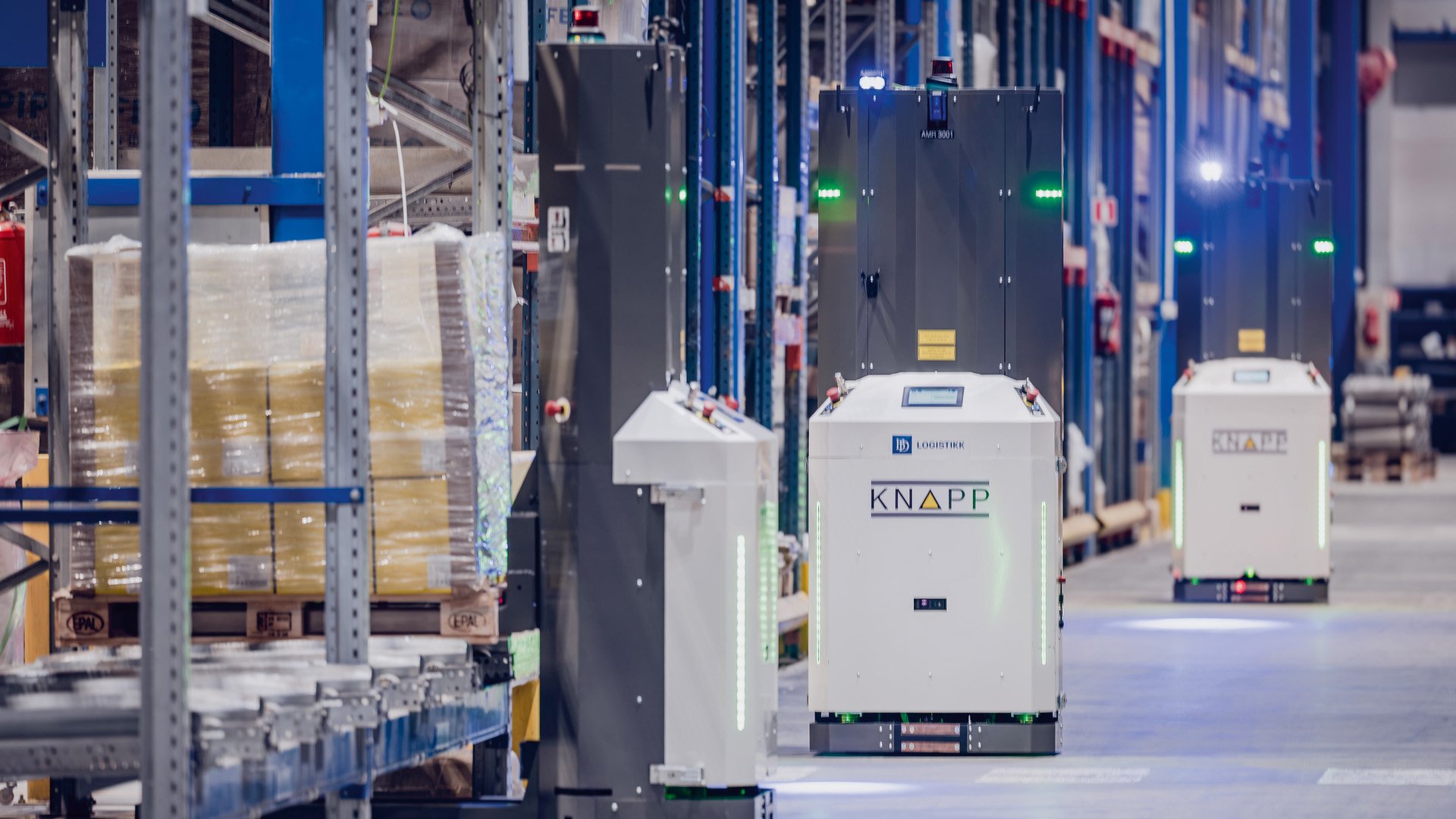
What interfaces does AMR software need?
Autonomous mobile robots rarely work as an isolated solution. In modern manufacturing and logistics environments, they have to communicate with enterprise software, machines, conveyor technology and other vehicles. For this, the AMR software requires standardized interfaces that provide reliable data exchange between all the systems involved.
Open interfaces and standards also facilitate the integration of new systems and vehicles, thus creating an important basis for interoperability, supplier independence and future expansions.
Key interfaces include:
What support is provided by digital twins, simulations and analytics?
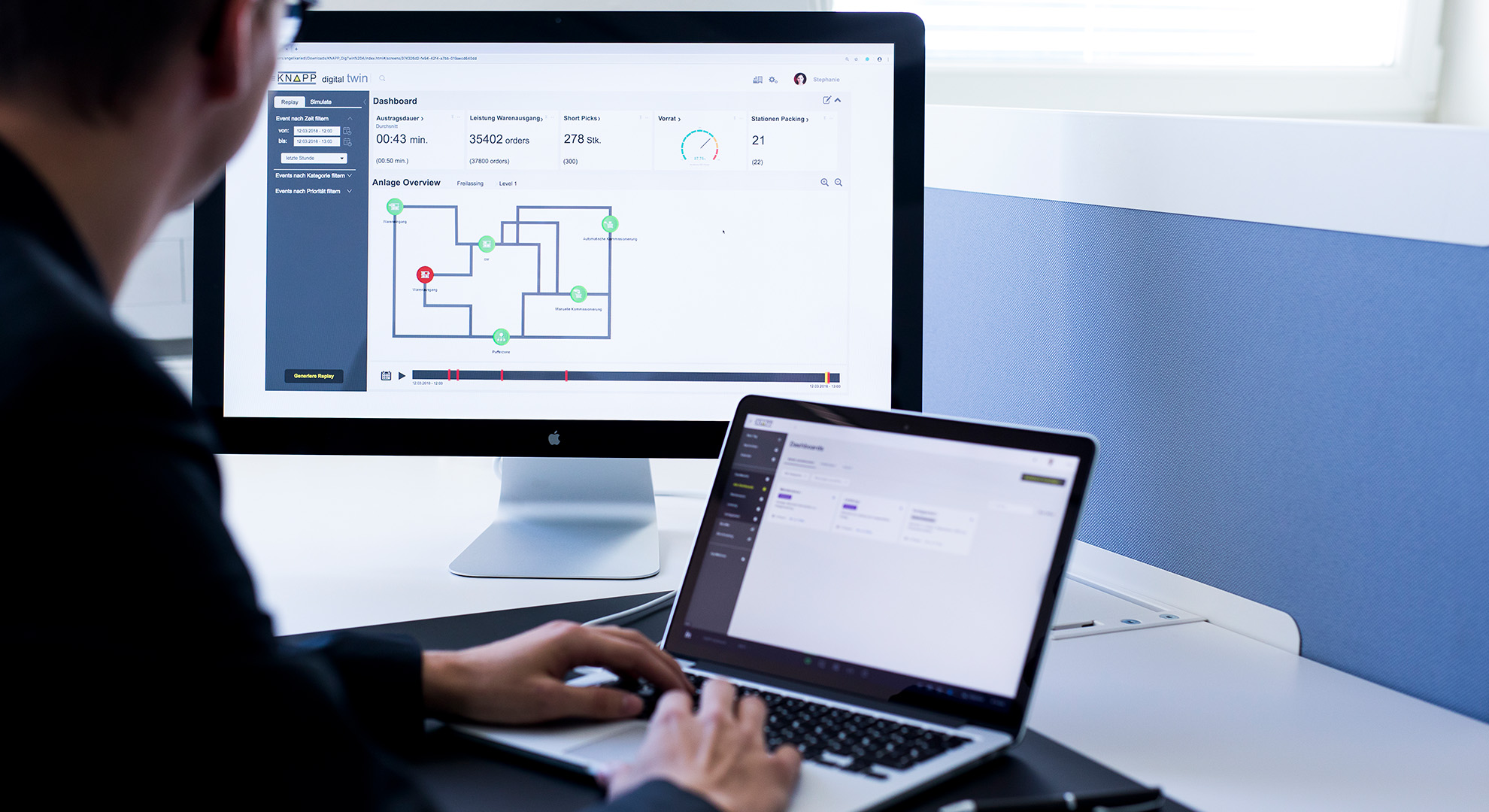
Digital twins, simulations and analytics support the AMR fleet across different phases. Before startup or expansions, the processes, layouts and different scenarios can be tested virtually so that the effects of additional robots or changed processes can be evaluated. During operation, analytics functions create transparency about vehicles, transport orders and material flows and help to identify optimization potential. KiSoft FCS also offers functions for simulation and analysis providing the support needed for fleet planning and continuous optimization.
What should companies look for when choosing AMR software?
When selecting an AMR solution, companies should evaluate not only the vehicles, but also the software behind them. Software is a key factor in how the AMR fleet can be operated efficiently, scaled and made future-proof. Important selection criteria are:
Integration and openness
Compatibility with existing IT and automation systems as well as open interfaces and standards to flexibly integrate vehicles and other systems.
Scalability and flexibility
Ability to add additional vehicles, processes, and areas to the solution and implement new requirements with little configuration and customization.
Transparency and monitoring
Monitoring and diagnostic functions that provide an up-to-date overview of vehicles, transport orders and system statuses.
Simulation and predictability
Simulation and digital twin functions that allow new scenarios and changes to be assessed before they are implemented.
IT infrastructure and cybersecurity
An operating model that fits the IT strategy, as well as appropriate security features for access rights, communication, updates and data management.
Operations and lifecycle management
Support as well as update and release management for reliable long-term operation and further development of the solution.
Making changes independently at Cummins with KiSoft FCS
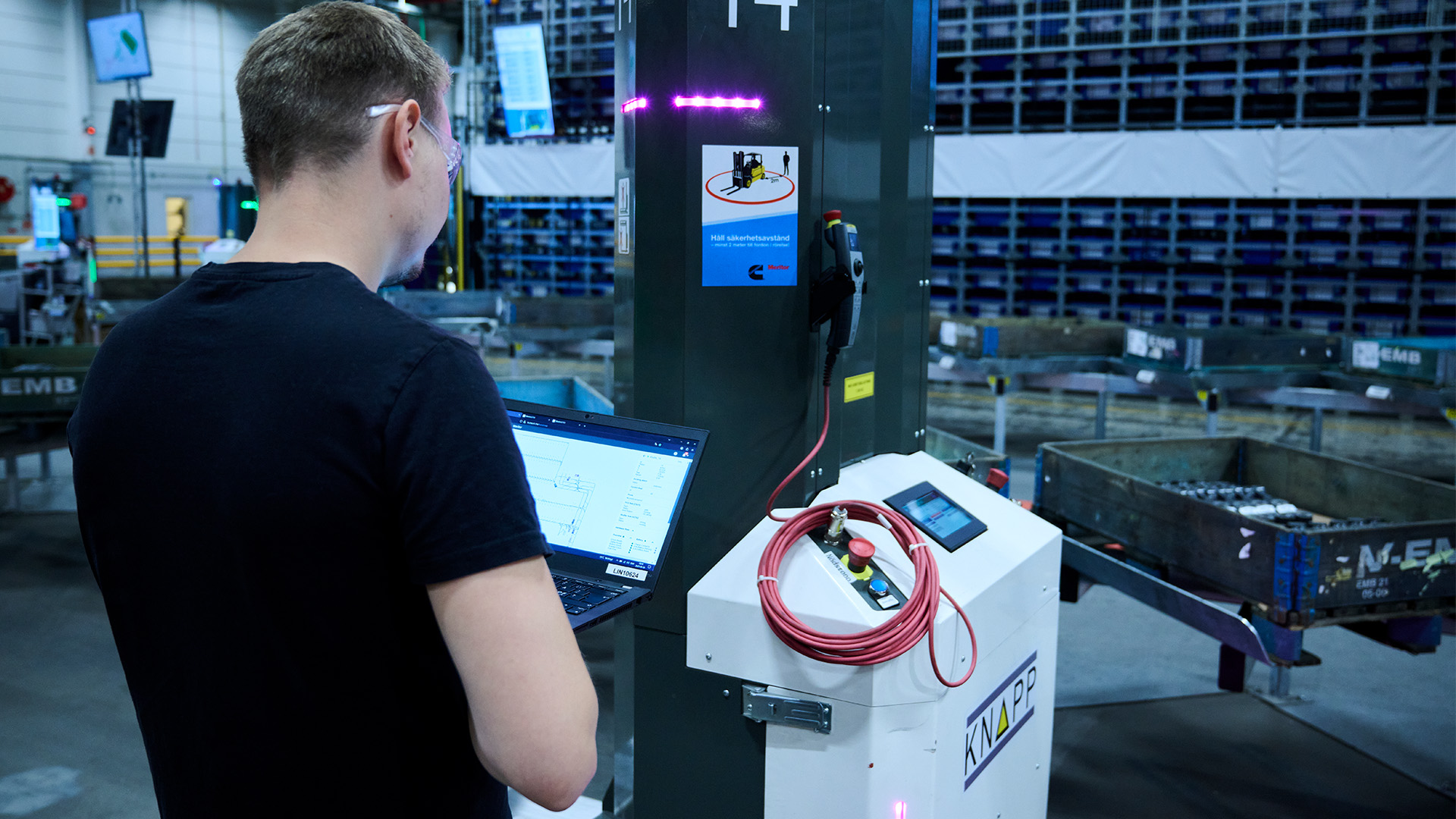
At Cummins, the fleet management software KiSoft FCS controls the autonomous mobile robots. Changes to material flows, priorities or transport orders can be made independently. This allows flows of materials to be adapted to new requirements without having to rely on external support for every change.
Software for autonomous mobile robots in practice
Open Shuttles and KiSoft FCS at SICK
The SICK Group’s example shows how important the right software is for operating an AMR fleet. At the production site in Kunsziget, 27 Open Shuttles transport materials between the automated small parts warehouse and manufacturing. The robots are centrally controlled by the KiSoft Fleet Control System (FCS), which is directly connected to SAP® EWM. The software coordinates transport orders, prioritizes them, and ensures transparency across the entire fleet. Thanks to the close interconnection of fleet management and warehouse management, materials are delivered to the right location, as needed and just-in-time. A digital twin also supports the continuous optimization of processes and fleet sizes.

FAQs autonomous mobile robot software
Can AMR software control the robots of different make?
Whether vehicles from different manufacturers can be operated together depends on the software used as well as the supported interfaces and standards. Open communication standards such as VDA 5050 can facilitate the integration of mixed vehicle fleets. Open Shuttles can also be connected to other control systems via VDA 5050 and controlled by them.
What role does VDA 5050 play when it comes to AMR software?
VDA 5050 is an open communication standard for automated guided vehicles (AGVs) and autonomous mobile robots (AMRs). The standard defines the communication between the fleet management system and robots and facilitates the integration of robots from different manufacturers. This makes it easier to operate mixed fleets in a common software environment.
Do AMRs need to be connected to Wi-Fi?
In most applications, AMRs communicate with the fleet management and higher-level systems via WLAN. This allows orders, status information and vehicle data to be exchanged in real time. However, many safety functions such as navigation, obstacle detection or safe stopping are handled by the robot itself. This means that even if communication fails temporarily, the vehicle control system remains unaffected.
How many mobile robots can a fleet management system coordinate?
Modern fleet management systems such as KiSoft FCS are designed to manage both small fleets with a few vehicles and much larger installations. It is important that the software is able to grow with the needs of the business.
How important is cybersecurity in AMR software?
AMR software processes orders, vehicle data and status information and communicates with the enterprise systems as well as the vehicle fleet. Therefore, security aspects such as role-based user rights, secure communication channels, software updates and controlled data management should be considered when selecting the solution.
Learn more about our fleet management software KiSoft FCS!
