
Automating transport processes is one of the most effective levers of change that can be used to improve efficiency in intralogistics processes and gain a competitive advantage. Before investing in this technology, companies want three questions answered: How much will automating transport with autonomous mobile robots (AMRs) cost? How fast is the return on the investment? And what kind of savings can be realistically expected? We have the answers.
Key Takeaways
AMR costs
The total costs of an AMR include all one-time costs and ongoing expenditures over its entire life cycle. A well-founded analysis usually includes three cost areas:
1. Purchase and infrastructure
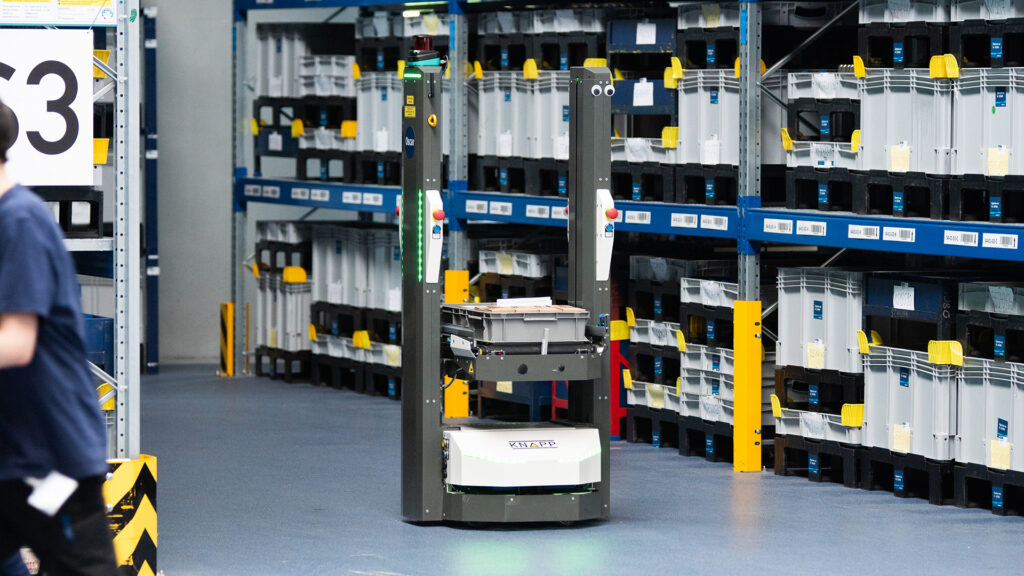
These investments include the AMR itself, the necessary software for fleet control and any infrastructure needed such as loading zones or connections to existing systems. Project engineering and planning are also part of this. The scope and costs depend on the application and complexity.
2. Integration and startup
This cost block includes installation, integration in existing processes as well as employee training. Startup is usually accomplished during ongoing operation, with short interruptions sometimes necessary. The goal is to create a robust system that the company can later expand and maintain by themselves.
3. Operation and maintenance
Once the system is running, costs will include service, maintenance, software updates, adaptations and wear parts. Energy needs and any expansions of the fleet also fall under this category. These expenses are negligible in comparison to the initial investment and maintain the system availability.
Find out more about the costs involved in running an AMR.
Six ways autonomous mobile robots bring savings
The costs saved using an AMR can be divided into direct and indirect savings. Companies can benefit in six major ways. They can:
Calculate the ROI for an autonomous mobile robot: step by step
The ROI – return on investment – measures how profitable an investment is. With AMRs, the calculation includes savings as well as additional potential benefits. Furthermore, the payback period is a central criterion in the decision to invest.
The basic formula for calculating the ROI and the payback period is as follows:
ROI = (annual savings + additional benefits - annual operating costs) / capital expenditure x 100
Payback period (years) = total investment / net annual benefits
An ROI between 18 and 36 months is considered quite good. Many AMR projects have a payback period of 1–3 years if processes were previously manual. The actual profitability depends a great deal on labor costs, distances traveled and daily throughputs. In high-wage regions and three-shift operations, the ROI is even better, whereas for smaller setups it is more conservative.
Are you interested in an example calculation of an AMR ROI?
Strategic benefits beyond the ROI
Alongside measurable cost effects, autonomous mobile robots create longterm strategic advantages:

Discover more about autonomous mobile robots and their advantages in our blog article Autonomous Mobile Robots (AMR): Definition, Use, Advantages >
Practical example at Fronius: Advantages and benefits
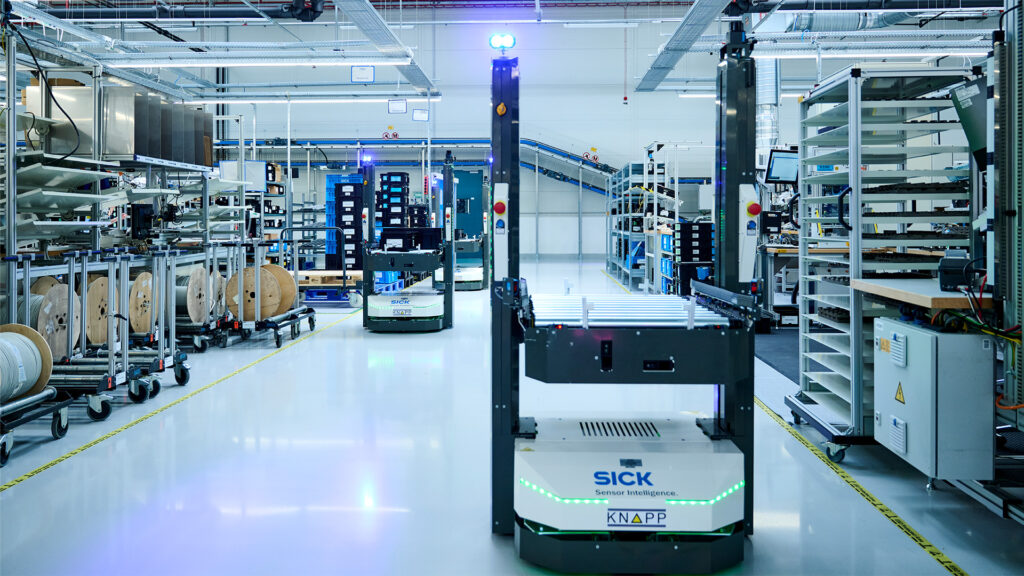
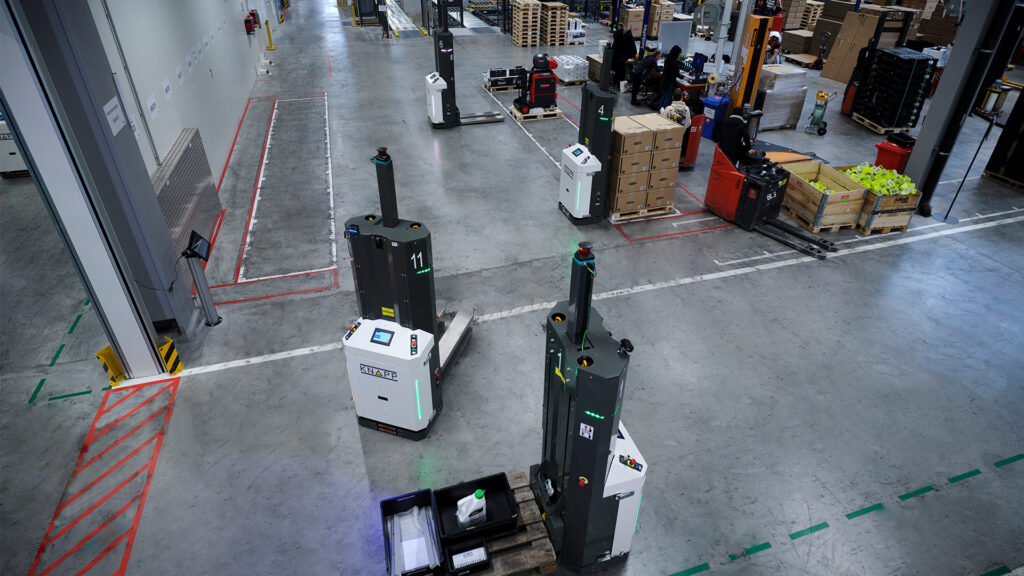
Fronius has a fleet of 16 Open Shuttle Fork AMRs automating pallet transport. Every day they travel 400 kilometers (249 miles), supplying the production cells with pallets and connecting various halls with each other. Fronius is equipped to change their own processes flexibly and independently. This makes their overall operation faster and more cost-efficient.
Discover more in the Case study >
Financing autonomous mobile robots
Selecting the right financing model for automated transport systems and autonomous mobile robots (AMRs) depends heavily on the requirements of an operation, the investment strategy and liquidity. Here is an overview of the three most common options:
| Finance model | Description and advantages | Suitable for |
| Purchase | For long-term stability, one-time investment, ownership of the hardware and software, possible write-offs | Companies with clearly defined processes and sufficient investment resources |
| Lease/rent | No high initial investment, plannable monthly rates, protects liquidity, allows flexibility | Companies with changing requirements and the desire for an even cash flow, to cover peak periods |
| Pay per use | Invoiced according to use, low barrier to entry, faster start | Companies with strongly fluctuating workloads or for a pilot project |
The right choice is not just based on costs, but on the strategic meaning of the AMRs for the company. When aiming for automation in the long run, purchase or leasing is a profitable option. Learn more about our flexible ways of getting Open Shuttles for your business >
Conclusion: Why AMRs for automated transport pay off
Autonomous mobile (AMR) robots are an important part of modern intralogistics. Their clearly defined cost blocks, hardware, software, infrastructure, integration and operating costs make transparent evaluation and safer investment planning possible. While the purchase and infrastructure account for most of the costs, operating costs such as service, energy and updates remain relatively low. At the same time, AMRs reduce personnel costs, transport damage and ensure stable processes through their continuous operation. The investments often pay off within two to three years. Companies that invest early in autonomous mobile robots profit over the long term from plannable costs, high scalability, and a flexible, future-proof foundation for meeting the growing demands of their business.
Would you like to know how fast AMRs would pay off for your company?
We are here to help!

Industry Solutions
