
KiSoft WES
Smart warehouse coordination
KiSoft WES (Warehouse Execution System) couples the warehouse management system (such as KiSoft WMS) with the operational level. It makes sure that all systems work together at the right place and at the right time. While the WMS plans what needs to be done, KiSoft WES decides in real time how and when to do it most efficiently.
Are you looking for a conductor to lead your orchestra of systems?
KiSoft WES: the link to automation
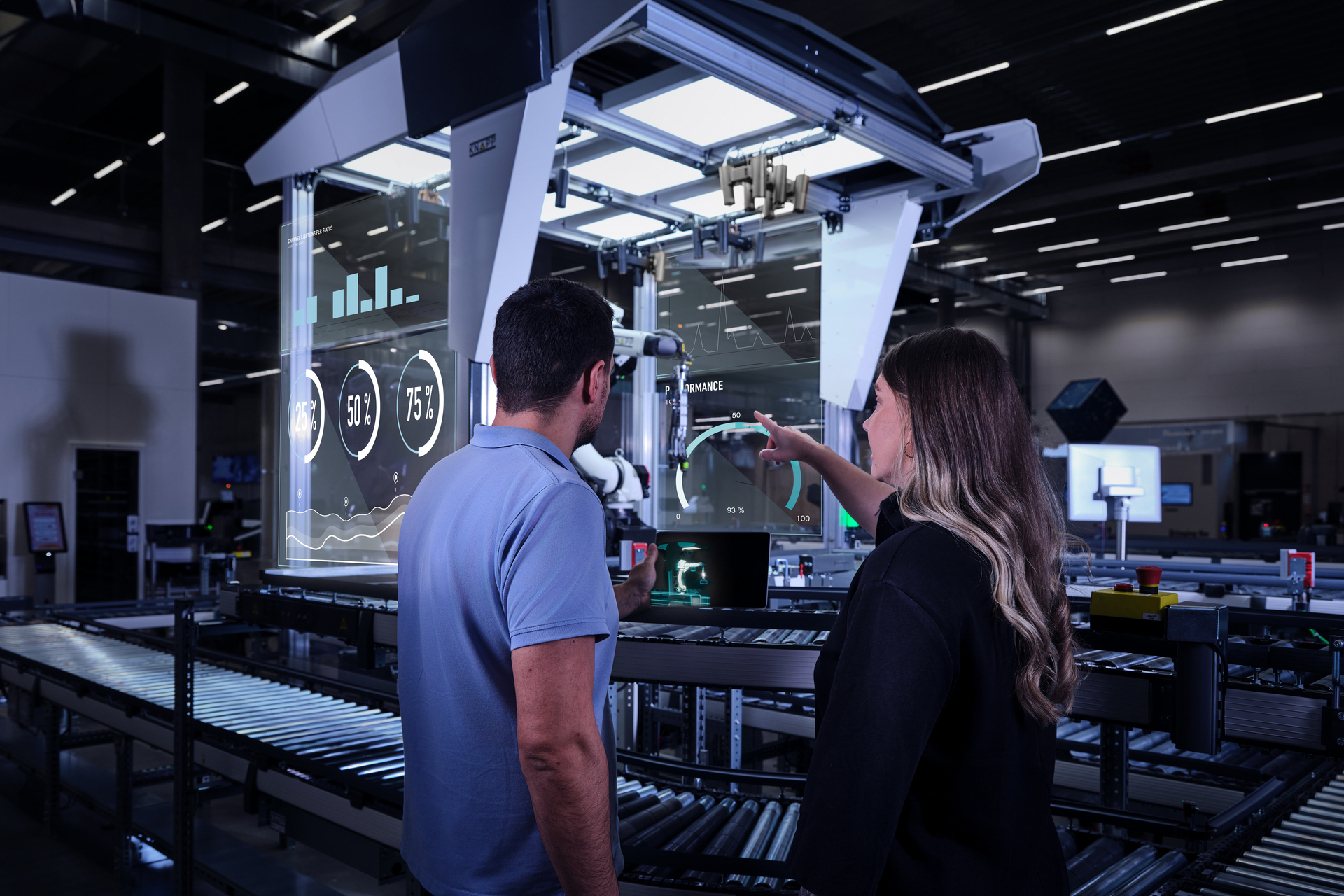
KiSoft WES coordinates the interplay of several systems. It prioritizes orders, identifies bottlenecks and optimizes material flows dynamically, resulting in more transparency, a more balanced workload and shorter lead times. The solution responds to changes in daily operations flexibly and can be easily combined with other KiSoft products. Thanks to its modular design, KiSoft WES is easy to integrate into existing systems – you decide which modules to activate depending on what your business really needs.
On a functional level, KiSoft WES communicates between warehouse management systems and control systems such as KiSoft WCS or KiSoft FCS, serving as the intermediary between these systems. In Europe, standalone WES solutions are rare, as the functions are often integrated in WMS and WCS solutions and the functional borders of WES solutions aren’t always clear cut, especially those from third-party providers, which can result in functional overlaps.
Benefits of KiSoft WES
Are you curious how KiSoft WES can support your processes?
When is KiSoft WES recommended?
Are you already using a warehouse management system (WMS) in your manual warehouse? If your WMS doesn’t connect to automation solutions or allow for the integration of subsystems, KiSoft WES is ready to step in. It ensures that automated processes function smoothly and that all systems work together optimally.
KiSoft WES is part of KNAPP’s wide product and software portfolio and offers all functions to optimally meet your requirements. In that vein, KiSoft WES can be extended to include higher-level warehouse management system (WMS) or lower-level warehouse control system (WCS) functions.
Funktionsumfang von KiSoft WES
In einem gemeinsamen Projekt werden die notwendigen Funktionen von KiSoft WES auf Ihre Bedürfnisse hin angepasst. Als Beispiel kann KiSoft WES Folgende Funktionen umfassen:
WMS |
WMS - WES |
WES - WCS |
WCS |
|---|---|---|---|
| Integration des Transportmanagements | Integration des Versandmanagements | Sorter - Management / Steuerung von Sortieranlagen | Integration von fest installierten Scannern |
| Integration des Auftragsmanagements | Nachschubmanagement / Bestandsauffüllungsmanagement | Automatisiertes Kommissionier Management | Integration der Maschinensteuerung |
| ERP - Integration | Erstellung von Versandmanifesten für Kleinsendungen | Pick-to-light management / Lichtgeführte Kommissionierung | Integration mobiler Scanner |
| Erweiterter Wareneingang | Manuelles Kommissionierungsmanagement | RF-Kommissionierung | In-Line-Druck-und-Applikationssystem / Etikettieren im Durchlauf |
| Management-Berichterstattung | Spracherfassung / Sprachgestützte Datenerfassung |
In‑Line‑Gewichts- und Bewegungserfassung / Gewichts- und Bewegungskontrolle im Durchlauf
|
|
| Rücklagerung | Bestandsmanagement / Lagerverwaltung | ||
| Lagerplatzoptimierung |
Zu den Hauptaufgaben eines Warehouse Execution Systems gehört es, sich um die Abwicklung und Koordination aller Prozesse für die Auftragserfüllung zu kümmern. Das beinhaltet die Orchestrierung aller involvierten (Sub-) Systeme (z.B. Voice- oder RF-Kommissionierung), sowie die notwendigen Schnittstellen zu den übergeordneten und externen Systemen. Zusätzlich deckt das WES alle Zusatzprozesse wie Nachschubverwaltung und Inventur Management ab.
FAQs – Key questions and answers
A WMS (warehouse management system) plans and manages warehouse processes at a strategic level, while a WES secures operations in real time, controlling, prioritizing and synchronizing the different process steps in the warehouse. WES are especially vital in automated and highly dynamic environments where it is necessary to optimize throughput, the workload and ability to respond.
If these functions are covered by a WMS or WCS, then a separate WES is not required.
As an event-driven system operating in real time, a WES is highly flexible. It has to respond to errors, bottlenecks and changes in priority immediately and it does so by adjusting the priority of orders dynamically or redirecting material flows.
A WES collects and processes data from all connected systems in real time, providing a seamless overview of your orders’, resources’ and material flow’s current status. This transparency allows you to make decisions faster and analyze errors more effectively, laying the foundation for continuous process improvement.
