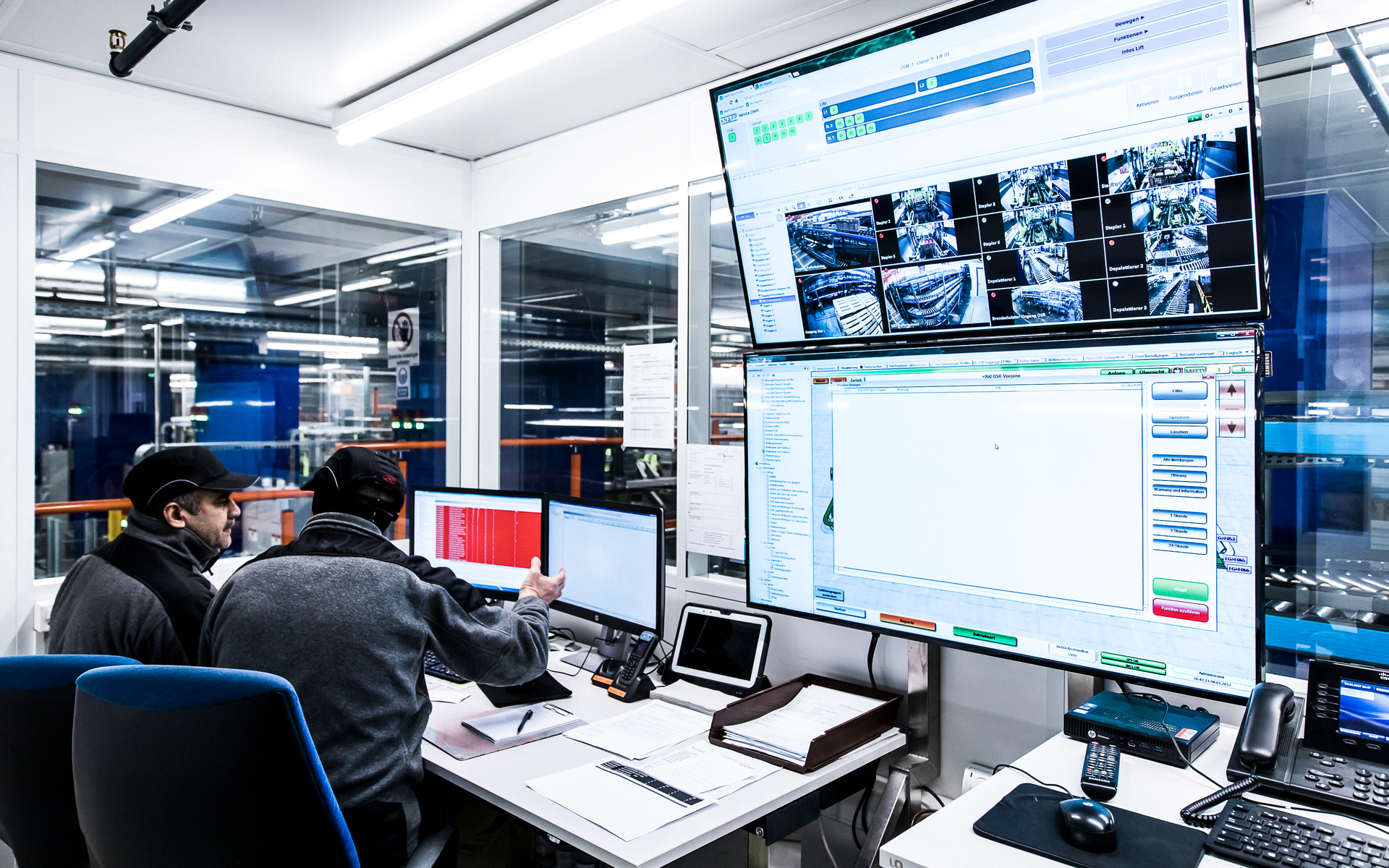
Migros Zurich relies on automated fresh food logistics
Migros is the largest Swiss retail company with 631 stores in Switzerland. The Migros Zurich co-operative was founded in 1941 and today has a membership of around 323,000.
Migros Zurich’s trading area covers most of the Canton of Zurich and the entire Canton of Glarus. It also includes the upper part of Lake Zurich and the bordering communities of the Cantons of St. Gallen and Schwyz. In these regions you can find 104 Migros shops, 25 speciality markets, 47 catering establishments, 11 Migros partners and more. With over 8,900 employees, Migros Zurich is one of the major employers in the region, with a turnover of about 2.5 billion Swiss francs per year.
System size: 4.200 m²
1.400 different articles
Shuttle-Solution wie 12.500 storage locations
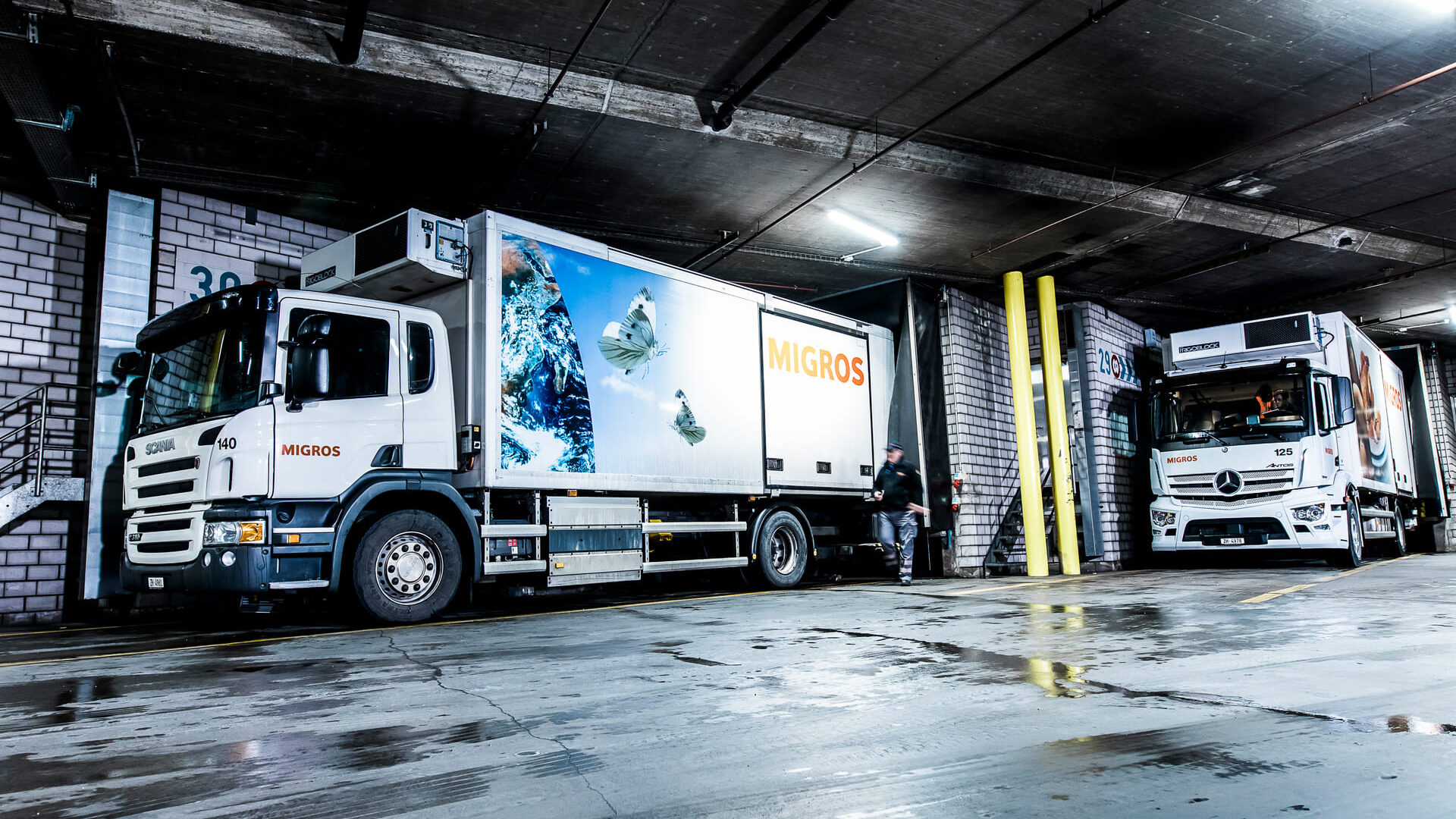
Since we had a good experience with the first automatic picking solution for the
fruit and vegetable range, we decided to work with the KNAPP group again. The KNAPP automation technology ensures economical and on-time delivery.
Beat Erb
Head of Engineering, Cooperative Migros Zurich
Do you want to learn more about logistics automation?
Get in touch with our experts today.
The Migros solution at a glance
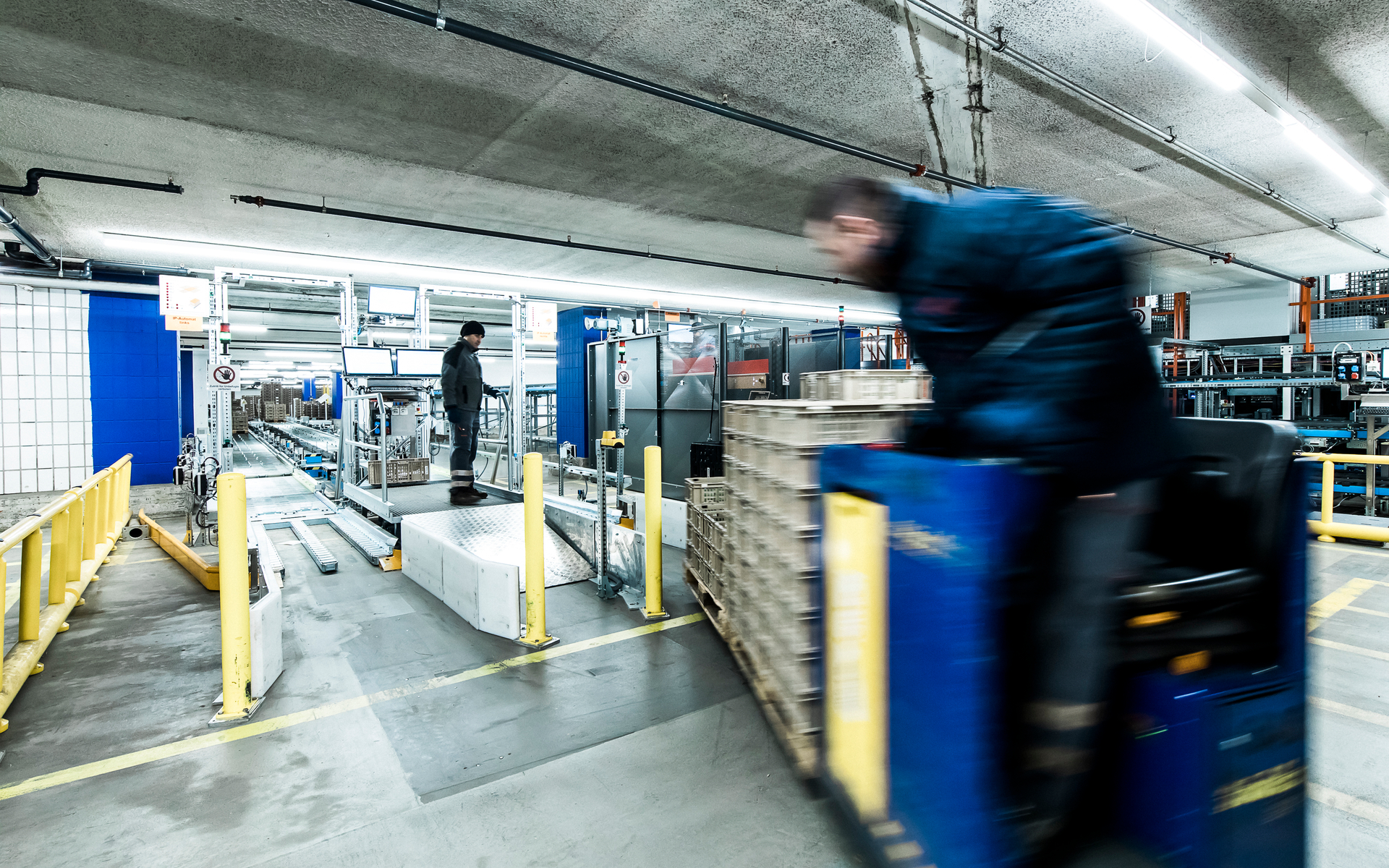
Goods-in and manual depalletizing
Following in-bound delivery, an employee transports the original pallet using a warehouse vehicle to either manual depalletizing or to a pallet conveyor system, where the pallet is then transferred for automatic depalletizing and destacking.
At a manual depalletizing station, mixed pallets are registered in the system and the handling units are transferred to trays for storage in the Shuttle-system.
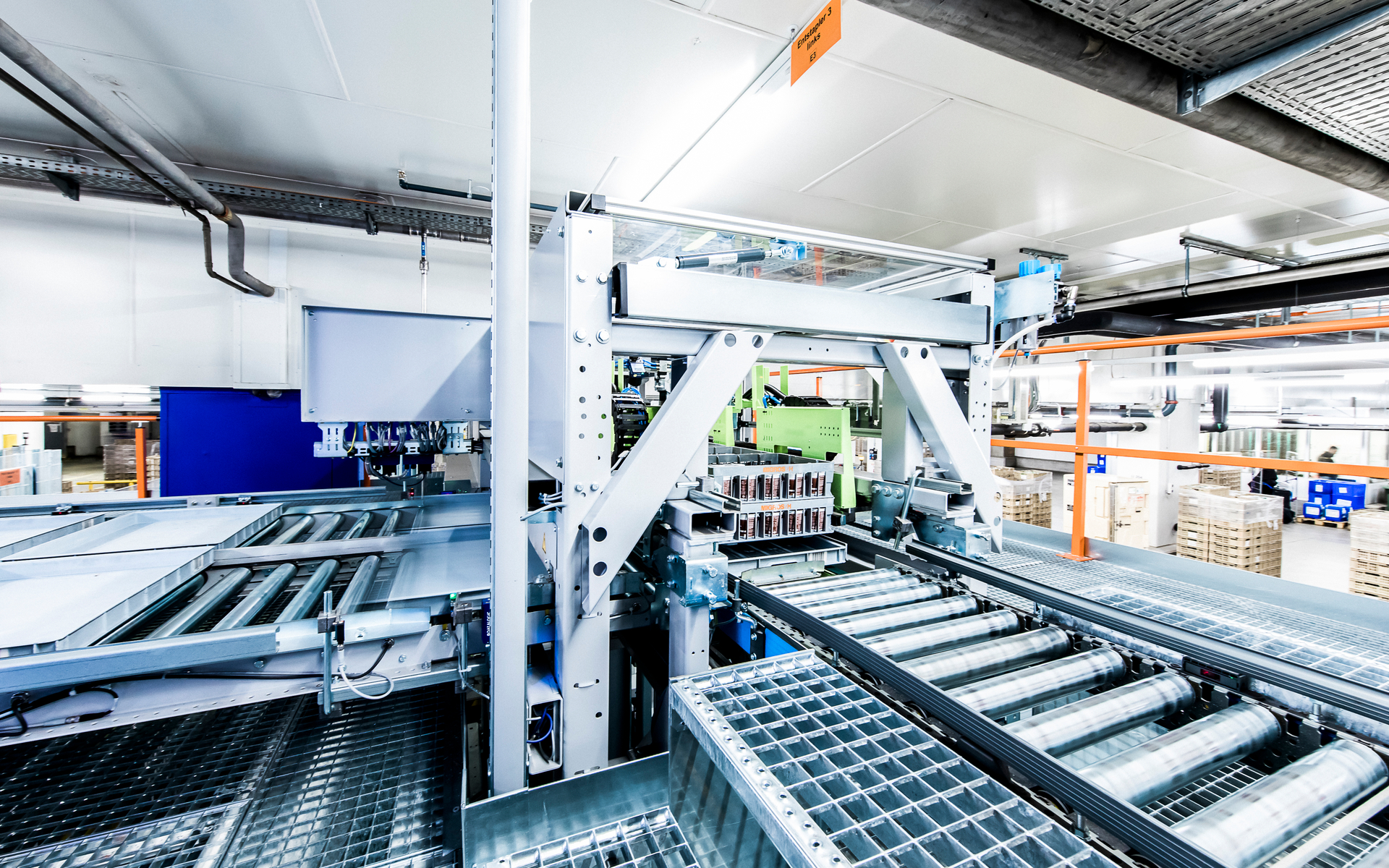
Automatic depalletizing and destacking
Once registered, unmixed pallets are conveyed on the Powerline pallet conveyor system to three downstream depalletizing and destacking machines. First, the pallets are separated from the handling units and conveyed to an empty pallet stacker. Destackers separate the handling unit stacks by lifting the stacks in a frame lift and then destacking them layer by layer.
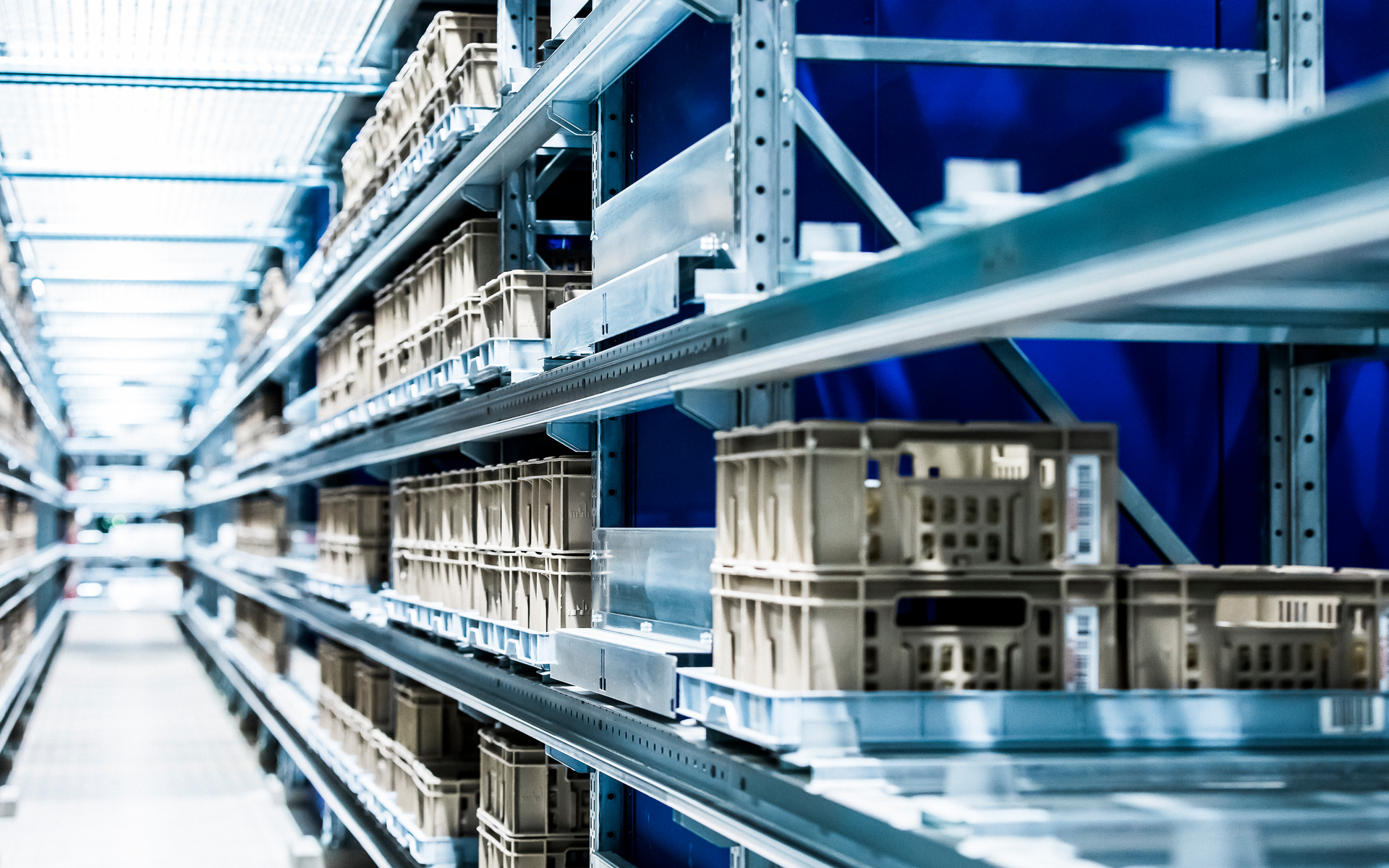
Shuttle-System
The articles are temporarily stored in the Shuttle-system until they are required for shipping. Once all the store orders have been received, the order data from the higher-level ERP system is transmitted to the KNAPP warehouse management software KiSoft WCS. KiSoft Pack Master calculates the best formation for the pallets, taking into account handling unit and product data, and determines the correct retrieval strategy.
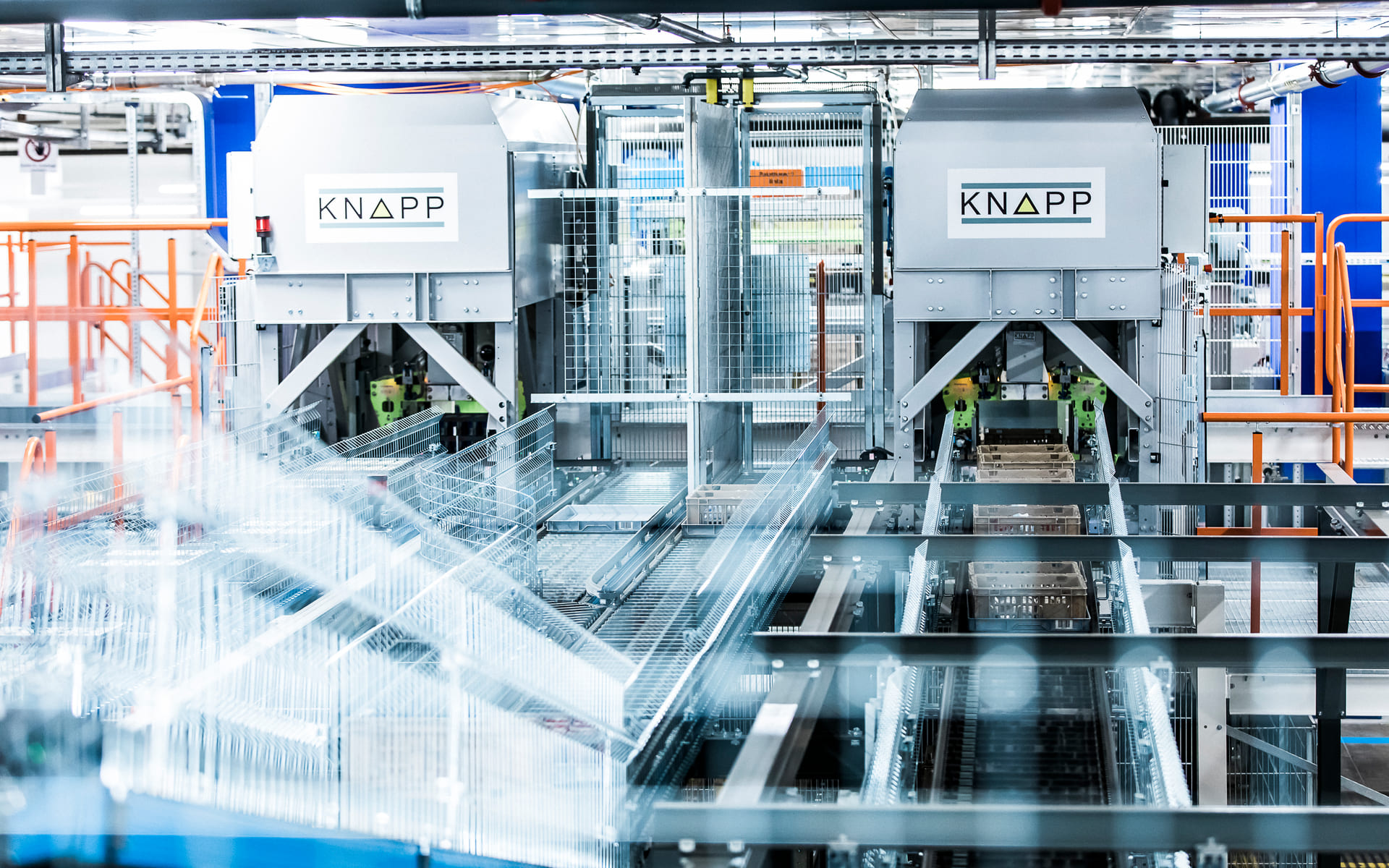
Automatic stacking and palletization
Once all the articles required to build a complete order pallet are on hand, the handling units are conveyed to a stacking module, which forms order pallets automatically. Considering diverse stacking criteria, the stacking machines form compact pallets for the stores. The completed stacks are then automatically palletized.
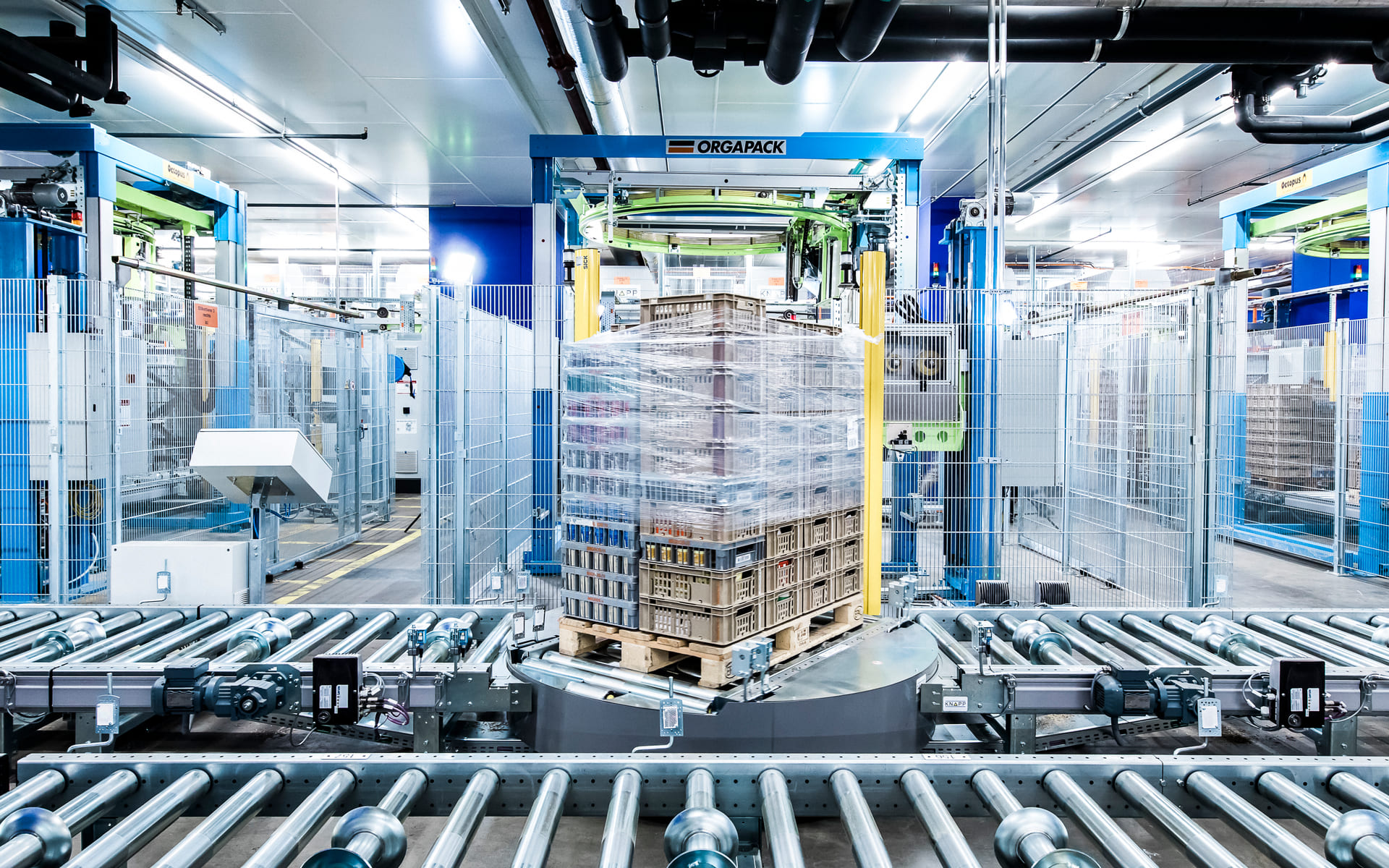
Goods-out
The completed pallets are automatically wrapped for transport with a banderole and provided with a shipping label. Pallets ready for dispatch are conveyed on the pallet conveyor system to a pick-up position, from where an employee brings them to goods-out.
Software