Pharmaceutical distribution is currently undergoing a dynamic transformation. There have never been so many technical possibilities available for supplying patients with medicines so quickly, reliably and securely. Innovation, digitalization and automation have opened up opportunities that just a few years ago were unimaginable. In a world where medical advances are rapidly developing and the demand for reliable supply chains is growing, pharmaceutical distribution is becoming a matter of vital interest – not just as the logistics operating quietly behind the scenes, but as a critical element in quality of care and patient safety.
Whether it’s modern picking systems, intelligent software or new approaches to sustainable logistics, the sector is developing at a rapid pace. Technology partners such as KNAPP are driving the transformation forward with innovative solutions, but the overarching goal remains the same throughout the sector: a stable, efficient and future-ready supply chain that delivers healthcare supplies where they are needed.
Content
- Distinctive features in pharmaceutical distribution
- Game-changing automation
- Zero-defect technologies for greater precision
- Stability and peak capacity coverage
- End to end transparency through integrated software
- Flexibility from modular system architecture
- Process reliability through intelligent quality control
- Sustainability in the pharmaceutical supply chain
- Best practice examples from pharmaceutical distribution
- Conclusion
Distinctive features in pharmaceutical distribution
Pharmaceutical distribution is one of the most complex and sensitive sectors in logistics. No other supply chain is subject to such strict regulations, features such a tremendous product variety and shoulders such a tremendous responsibility in society. The final link in the chain is not just a consumer, but a person who is depending on an effective medication. This level of responsibility affects every step in distribution – from an organizational, technical and quality point of view.
Pharmaceutical distribution – shaped by regulations
Sensitive products require precise processes
High market dynamics: Flexibility is the critical factor in pharmaceutical distribution
Zero-defect approach is a core requirement in pharmaceutical distribution
Traceability on several levels
Pharmaceutical distribution – shaped by regulations
Strict regulations affect pharmaceutical distribution across the globe. In the US, central standards are defined in the Drug Supply Chain Security Act (DSCSA). This law obliges all trading partners to implement an electronic, interoperable system to trace drugs at the package level and specifies how serialization, documentation and verification processes are to be carried out along the supply chain. The DSCSA fulfills a function in the US similar to the GDP guidelines and the Falsified Medicines Directive (FMD) in the EU. Regardless of the market, the following applies: Every serial number and lot, and every movement of goods must be seamlessly documented and explicitly traceable. A single unrecorded process can trigger recalls, review processes, or quality risks. Transparency is not an optional added value, but a core obligation for secure, modern pharmaceutical distribution.
Sensitive products require precise processes
Medicinal products can often be temperature-sensitive or sensitive to light and vibration. Cool chains for biological pharmaceuticals, vaccines or blood products must be stable, while narcotics require additional security. This is why a simple solution from another sector would not be suitable for pharmaceutical distribution, which requires specialized processes.
High market dynamics: Flexibility is the critical factor in pharmaceutical distribution
Influenza epidemics, pandemics or supply chain bottlenecks cause peaks in demand. Systems within pharmaceutical distribution have to be efficient in their daily operations and scalable to handle peak periods. Here, automation creates stability, ensures consistent quality and reduces bottlenecks. This makes pharmaceutical distribution overall more robust, flexible and prepared for unanticipated peaks.
Zero-defect approach is a core requirement in pharmaceutical distribution
Every error can be dangerous for patients, which is why zero error is the expectation in pharmaceutical distribution. Automated check processes, camera-based systems and seamless identification ensure the highest precision in picking, packing and shipping.
Traceability on several levels
In pharmaceutical distribution, it isn't sufficient to just track products and lots. Temperature data, employee actions, process steps and shipping parameters must also be documented. Modern software platforms can bundle this information and ensure that regulatory requirements and internal quality requirements are completely fulfilled. They link realtime data from all the process steps, create end-to-end transparency in processes and support companies to consistently meet the high standards required in pharmaceutical distribution.
Game-changing automation
Pharmaceutical distribution must surmount a number of operational and regulatory hurdles. Automation helps companies not only to master the challenges, but also to stabilize processes sustainably, design them for efficiency and to raise the quality all at the same time. Modern technologies handle repetitive, error-prone or time-critical tasks and thus create space for reliable, scalable and secure processes – crucial factors in a sector that relies on precision and traceability.
Zero-defect technologies for precision
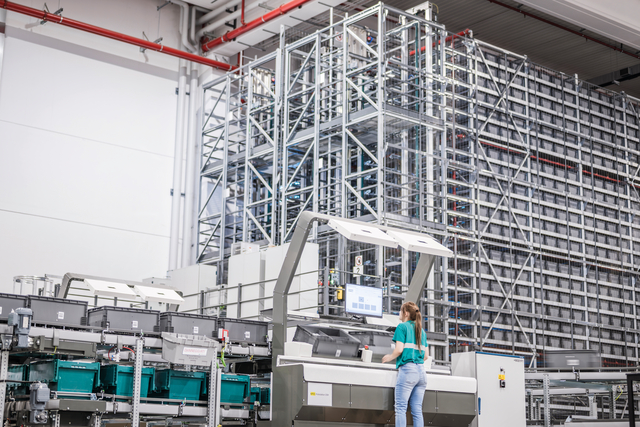
In pharmaceutical distribution, picking errors or identification errors can have far-reaching consequences. Automated identification systems, camera-based check processes and AI-supported validation increase process reliability and ensure that every pack is correctly processed. Systems such as the KNAPP Itemizer Check support pharmaceutical distribution by first separating items and then scanning, recording and documenting them from all six sides with the integrated Vision Slide – reliably verifying items and making an important contribution to maintaining quality standards.
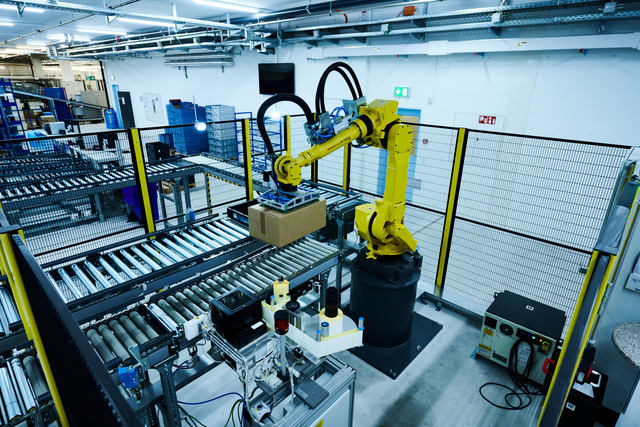
Picking is one area where zero defect is very profitable: Even where volumes fluctuate wildly, Pick-it-Easy Robots ensure maximum precision and consistent process quality in pharmaceutical distribution. For rapid order fulfillment, central belt systems with KNAPP’s A-frame ejectors are used to reliably fill orders while keeping errors to a minimum. KNAPP’s Pack2Patient solutions provide the highest certainty for patient-specific shipments, and the data backs this up: For 960,000 items picked using Pack2Patient, an error rate of a mere 0.00083 % was achieved. This is a crucial factor in pharmaceutical distribution where accuracy and traceability directly affect the safety of therapies.

Stability and the ability to handle the peaks
Situations where demand becomes highly volatile are normal in pharmaceutical distribution. “Flunamis”, supply bottlenecks or unexpected public health events can generate tremendous order peaks and place high demands on the flexibility of logistics systems. Automated picking systems – from the ergonomic Pick‑it‑Easy work stations to fully automated solutions such as the Pick‑it‑Easy Robot – provide the necessary stability in these situations. They keep performance at its peak, increase process reliability and keep the physical load associated with demanding tasks off the employees.
Combining shuttle storage systems, smart picking stations or pocket sorter systems such as those found in the KNAPP portfolio for pharmaceutical distribution worldwide make it possible to rapidly process these massive waves of orders without errors. Thanks to the integrated automation concept, pharmaceutical distribution can stay reliant, efficient and resilient even when volumes are fluctuating madly.
End-to-end transparency thanks to integrated software
From EU regulations like the GDP and FMD to the DSCSA in the US, the laws that apply to pharmaceutical distribution require that the supply chain be fully traceable. The DSCSA in the US requires an electronic, interoperable track and trace system at the level of the packaging with the goal of preventing counterfeits and to increase safety along the entire product life cycle.
In Europe, the FMD and GDP have the same purpose: Serialization, seamless documentation and protection against counterfeit medications or tampering.
In order to efficiently fulfill these complex requirements, pharmaceutical distribution needs integrated software platforms that can consolidate the movement of goods, lots, serial numbers, temperature data and process events – centrally and up to the minute.
KNAPP’s KiSoft suite goes even further:
The platform connects all the relevant data points along the supply chain, creates audit‑proof, end‑to‑end documentation and thus fulfills both the EU regulatory requirements and those of the DSCSA in the US. It supports serialization information and event histories which are central building blocks for global compliance and seamless transparency.
The result? Faster decisions, simplified audits, reliable traceability and pharmaceutical distribution that is safeguarded with respect to regulations and operations.
Flexibility thanks to modular system architecture
Real, overall scalability in automation for pharmaceutical distribution brings significant advantages. Modern systems must not only accommodate additional storage capacity, but also be able to process higher throughput rates, additional picking lines, more robotic modules or new software features – without technical interruptions or restarting the system. Scalability brings more performance, more functionality, more flexibility, and all during ongoing operation.
Modular shuttle systems allow companies to expand dynamically in terms of levels, shuttles or storage locations when order volumes, the product range or the service level increase. Simultaneously, robotic modules such as KNAPP’s Pick‑it‑Easy Robot can be added to new stations or integrated into existing processes to even out additional peaks or to process new product groups fully automatically.
With software, flexible solutions are needed that can be expanded by function: additional interfaces, new logic for checks, integrations for serialization, temperature tracking or patient-specific processes. Here KiSoft offers an integrated framework to flexibly complement the modules for warehouse management, robot control, track and trace, quality assurance or analysis – without changing the overall architecture.
KNAPP has intentionally focused on modularity to allow companies in pharmaceutical distribution to be able to expand step by step as their growth, assortment or regulatory requirements demand. Additional aisles for the shuttle system, more robots, expanded capacity for the pocket sorter system or new software modules can all be integrated without disturbing operation. This provides an infrastructure that grows, learns and stays adaptable – crucial for continued success in the dynamic pharmaceutical distribution sector.
Process reliability thanks to intelligent quality checks
Whether you need checks in the shipping area, at the end of the line or are just checking incoming returns, automating your quality control both minimizes risk and makes things easier for personnel. Intelligent systems identify deviations early on, prevent shipment errors and document every check automatically.
In many pharmaceutical distribution centers, automated check stations or camera‑based end‑of‑line solutions are used, which are also found in KNAPP installations. Complementary technologies such as AI‑based vision systems or KiSoft algorithms for identifying items additionally raise precision, while tools for resource management monitor the operative stability and visualize potential optimizations. This provides quality control that is consistent, reliable and scalable which is a compelling advantage in the distribution of highly sensitive pharmaceuticals.
Sustainability in the pharmaceutical supply chain
Sustainability is becoming more strategically important in pharmaceutical distribution. Today’s logistics systems help companies to save energy, optimize transport and use resources more efficiently, with green logistics having long been more than just a trend. Environmentally friendly measures have direct impact on cost structure, efficiency and competitiveness.
One central contributor is packaging optimization. Industry publications indicate that correctly sized packaging can significantly reduce the carbon footprint. Through tailored carton sizes, material consumption and shipping volumes are reduced which also prevents the transport of air, with all these factors directly impacting the environment and the budget.
Automated packaging technologies additionally bolster these effects. Machines cut the carton forms to precisely fit the order, reduce the void fill and increase transport efficiency. KNAPP and their long-term partner Packsize, experts in automated packaging solutions, demonstrate how “right‑sized” packaging reduces carton volumes by up to 40 % and void fill by up to 60 % – with significant savings in transport and CO₂ emissions.
The customer experience also improves: Customers often rate oversized packages critically, while sustainable, tailored solutions will strengthen your brand image, especially with younger demographic groups.
Sustainability in pharmaceutical distribution is attained through energy-efficient technologies, optimized goods flows and intelligent packaging systems. Automated solutions unite environmental responsibility with economic efficiency, while helping companies to gear up their supply chains for the future.
Best practice examples from pharmaceutical distribution
Pharmaceutical distributors around the world rely on automated and digitalized processes to be able to meet rising demand. In many cases, they profit from more reliable delivery times, lower error rates, better ergonomics for employees and a significant increase in performance.
Companies like KNAPP bring tremendous experience to the table, especially when it comes to combining technologies such as robotics, shuttle systems and intelligent software.
The results are clear: Efficiency, safety and reliability can be united successfully with each other.
Hippocrates – scalable pharma logistics for 480 pharmacies
Hippocrates is one of the leading pharmaceutical distributors in Italy and runs a tight network of 480 associated pharmacies. The decision to use KNAPP automation brought the company’s supply chain performance up to a whole new level with more scalability, greater flexibility and a significant increase in efficiency in supplying the pharmacies. The automated distribution center achieves faster processes and minimal error rates while simultaneously creating a stable foundation for future growth, marking a milestone in supply security for the entire network.
Limedika – omnichannel power with AutoPocket and A-frame
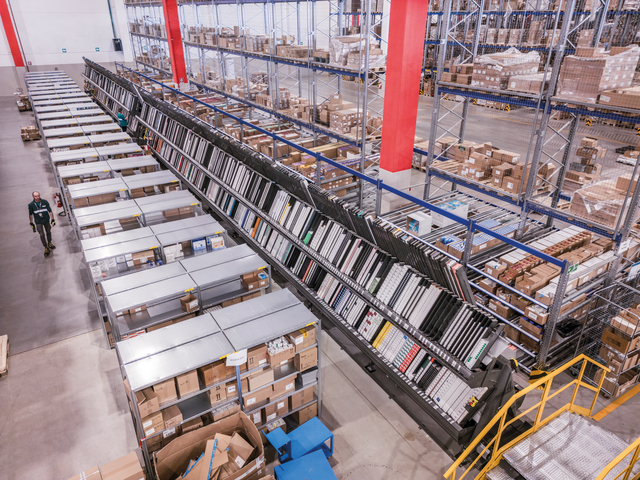
The Lithuanian pharmaceutical wholesaler runs one of the most diverse distribution models in the sector, from classic wholesale logistics to click & collect and B2C e‑commerce. Managing the complexity became much easier when Limedika invested in a KNAPP automation solution. The combination of AutoPocket sorting system, A‑frame and pack stations and check station ensures rapid, error‑free sequencing and complete traceability. The AutoPocket system in particular allows end‑to‑end tracking of serial and lot numbers and shortens processing times significantly – a critical advantage for the more than 3,000 orders daily and more than 13,000 SKUs.
Avosano – high-tech pharma logistics featuring Evo Shuttle and Central Belt System
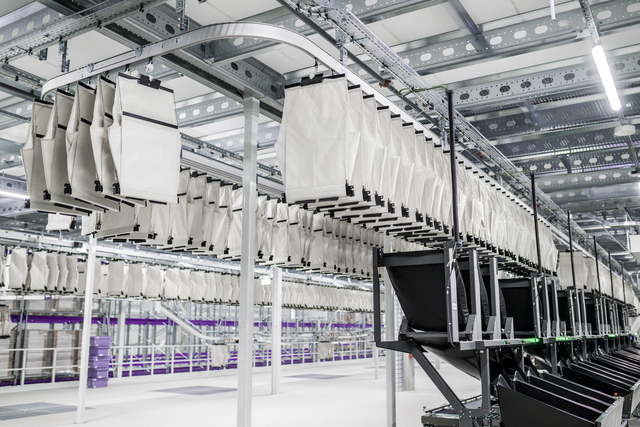
Swiss Avosano Group, which Voigt AG also belongs to, is one of the leading suppliers in pharmaceutical wholesale and pre‑wholesale. With high-tech logistics centers, the company is able to provide rapid supply across a diverse and widespread customer network in Switzerland. For the optimization of their distribution processes, Voigt invested in proven KNAPP technologies: The Evo Shuttle sorter system provides efficient, on-time provision of the picked orders, while the Central Belt System, a high-speed A-frame picking system for fast moving products reliably handles even the peak loads. This automation ensures stable processes, shortened lead times and maximal supply security for the daily business of pharmacies.
Conclusion:
Pharmaceutical distribution is entering a new era
Pharmaceutical distribution is undergoing profound technological change, taking it far beyond conventional logistics. The sector is transforming into a highly networked, data-driven and automated supply system. This is exactly what is needed for success in the future because where there are complex regulatory requirements, sensitive products and wildly fluctuating demand, technological excellence will deliver safety, efficiency and supply continuity.
The analysis clearly shows: Automation is not a luxury, but the new standard for a resilient, modern pharmaceutical supply chain. Zero‑defect technologies, robotics, intelligent control systems and modular architecture form the backbone of an infrastructure that prevents errors, stabilizes processes and dynamically expands capacities. At the same time, integrated software platforms such as KiSoft create the necessary end‑to‑end transparency needed to fulfill global regulations seamlessly, from FMD and GDP to the DSCSA.
Environmental aspects are also becoming strategically more important. Sustainable packaging processes, energy‑efficient systems and automated “right‑sized” solutions show that economic performance and environmental responsibility are not mutually exclusive, but mutually reinforcing.
The best practice examples from Europe demonstrate hands down what is possible when cutting-edge technologies are effectively used: Hippocrates, Limedika and Avosano prove how robotics, shuttle systems, software intelligence and modular automation make very different distribution models safer, faster and more flexible, strengthening supply across entire regions.
In the end, it’s very clear that the future of pharmaceutical distribution belongs to the companies using automation and digital intelligence as an integral part of their strategy and not just as separate tools. Those who invest in scalability, transparency, quality and sustainability today are not only gaining efficiency, but are taking responsibility for patient safety, supply security and contributing to the modernization of the healthcare infrastructure.
The next generation in pharmaceutical distribution is already within our sights; we need only to persevere in building it.

Business Units Healthcare/Wholesale
You are currently viewing placeholder content from Google Preferred Sources. To access the actual content, click the button below. Please note that this will result in data being shared with third parties.
More Information