
Cold-storage warehouses are a major strategic tool for food retailers handling a growing range of products while balancing different sales channels with high standards for quality and availability. However, low temperatures place extra stress on technologies, energy efficiency, the cold chain and working conditions.
Today, a solid freezer area alone is no longer a reliable success factor. Instead, all product areas in the overall logistics system have to work together precisely to create synergy so that items are available at the right time, temperatures stay within range and items are prepared properly for each sales channel. Custom automation concepts solve these challenges with different approaches for all temperature zones – from the freezer and produce areas to dry storage.
Table of content
Custom cold chain concepts for food logistics
Concepts for e-commerce and store delivery
- An integrated solution for all temperature zones
- Woolworths: Freezer island solution with the Evo Shuttle
Delivering frozen goods to stores fully automatically
Custom cold chain concepts for food logistics
While the freezer warehouse is the centerpiece of a food logistics solution, it’s not in a vacuum. The product range, other temperature zones and the sales channels determine how frozen goods are stored, picked and connected to downstream processes. Different requirements apply for order fulfillment, the cold chain and shipping depending on whether the goods are destined for stores, e-grocery or both.
To deliver frozen goods to stores, companies need a solution that processes large quantities, heavy cases and different packs efficiently. Creating stable pallets and roll containers is a must, too. Store-friendly sequencing and pallet packing pattern calculation not only achieve this, but also ensure that goods are accessible in a sequence that simplifies further processing in the store.
For e-grocery applications, individual items from different zones need to be combined to fulfill individual customer orders. The cold chain needs to be kept intact until the delivery reaches the customer. There are a couple of different options here: vehicles with active cooling or order containers automatically equipped with cold packs that provide passive cooling. Frozen foods can either be picked directly in the freezer or in a separate zone that is slightly warmer but still below freezing. All the while, solutions must adhere to national and company temperature requirements.
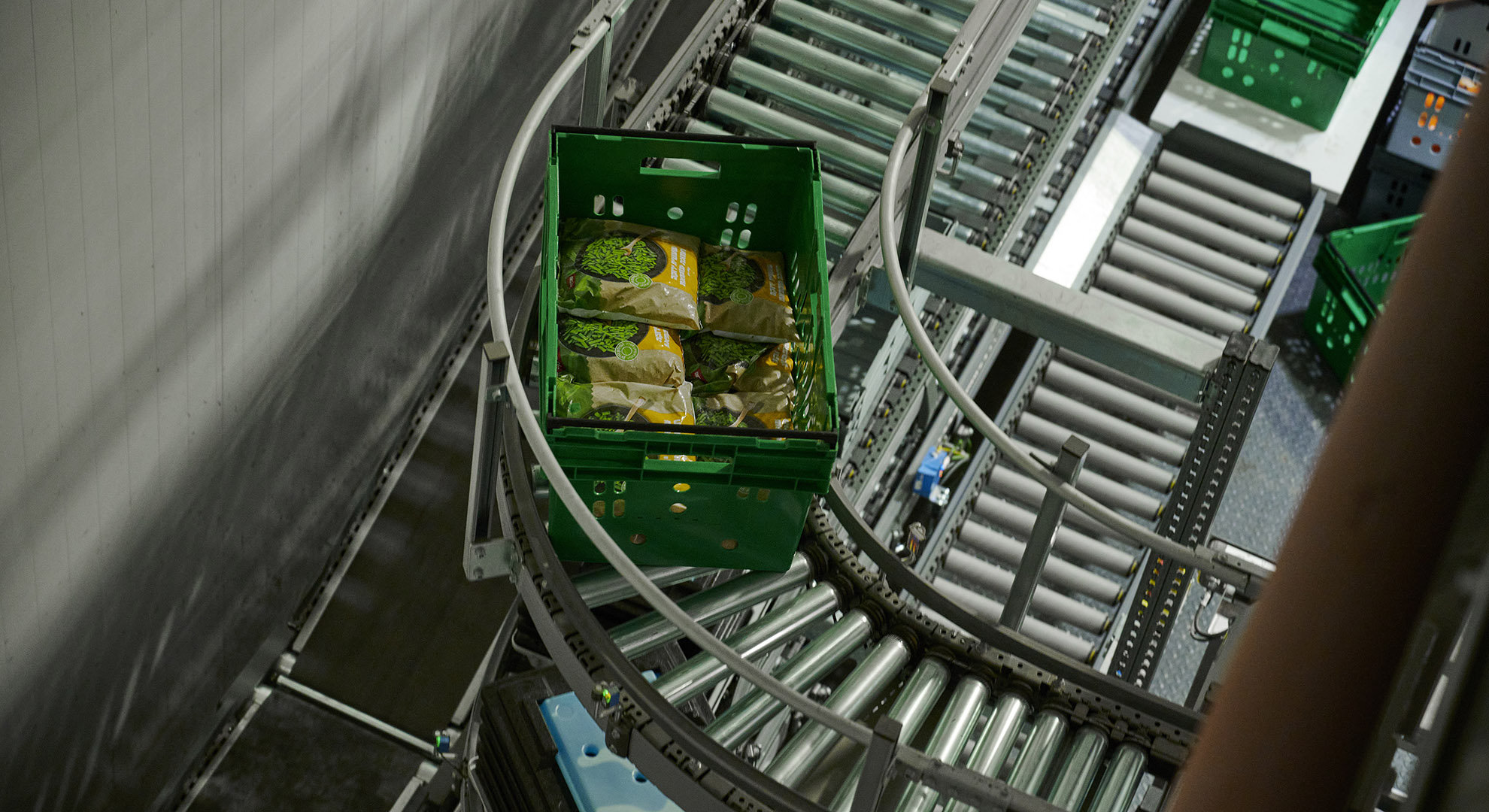
Our automation concepts are based on tried and tested standard solutions that we adapt to meet each customer’s unique processes and requirements. Depending on your requirements, the freezer warehouse can be a stand-alone freezer solution or integrated into a complete solution with other cold-storage, produce and dry storage areas.
A high level of automation has another advantage for freezer warehouses: fewer manual processes in the freezer itself mean that personnel do not need to spend as much time in the extreme cold. Automated processes reduce physically strenuous tasks and promote safe, ergonomic workflows.
When we make adaptations, we start the test at normal temperatures. The cooling phase is a key part of this process because it shows if containers are deformed by the temperatures or if any other similar changes occur.

Concepts for e-commerce and store delivery
Depending on the sales channel and process requirements, temperature-controlled automation solutions can be designed differently. For e-grocery, concepts range from an integrated solution for all temperature zones to a separate freezer area. Store delivery, on the other hand, benefits greatly from fully automatic case picking and palletizing.
An integrated solution for all temperature zones
A great example of such an integrated solution is at Shufersal’s Central Fulfillment Center, which processes goods from four different temperature zones in a single system. The temperature zones include dry goods, produce and freezer areas.
The challenge is making all these areas interact harmoniously. Frozen goods are still picked at subzero temperatures – but not necessarily in the freezer area itself. Supporting this process is dwell time management software, which calculates how much time a container can spend in a certain zone. The maximum dwell times are part of the item master data.
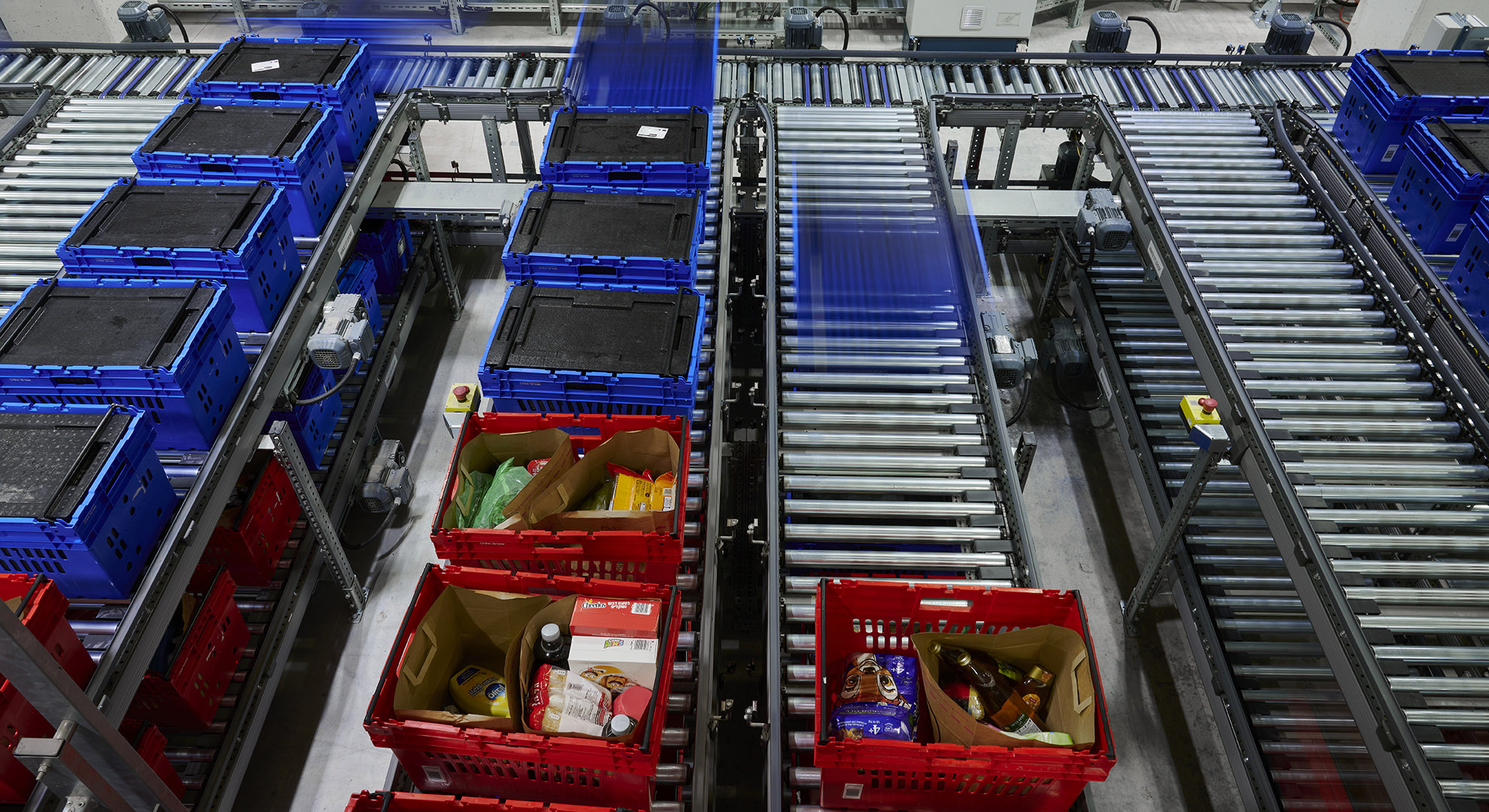
Shipping is also part of the cold chain concept. Frozen foods are automatically retrieved from a central storage system and packed into storage containers. Then the completed orders are sequenced for their given route. Storage, picking, temperature control and shipping all interconnect across the complete solution, while software ensures that the cold chain is kept intact until the groceries reach the consumer.
Woolworths: Freezer island solution with the Evo Shuttle
Woolworths also has an automation solution that covers different temperature zones. However, the freezer area is set up as its own independent island and is not connected directly to the other temperature areas.
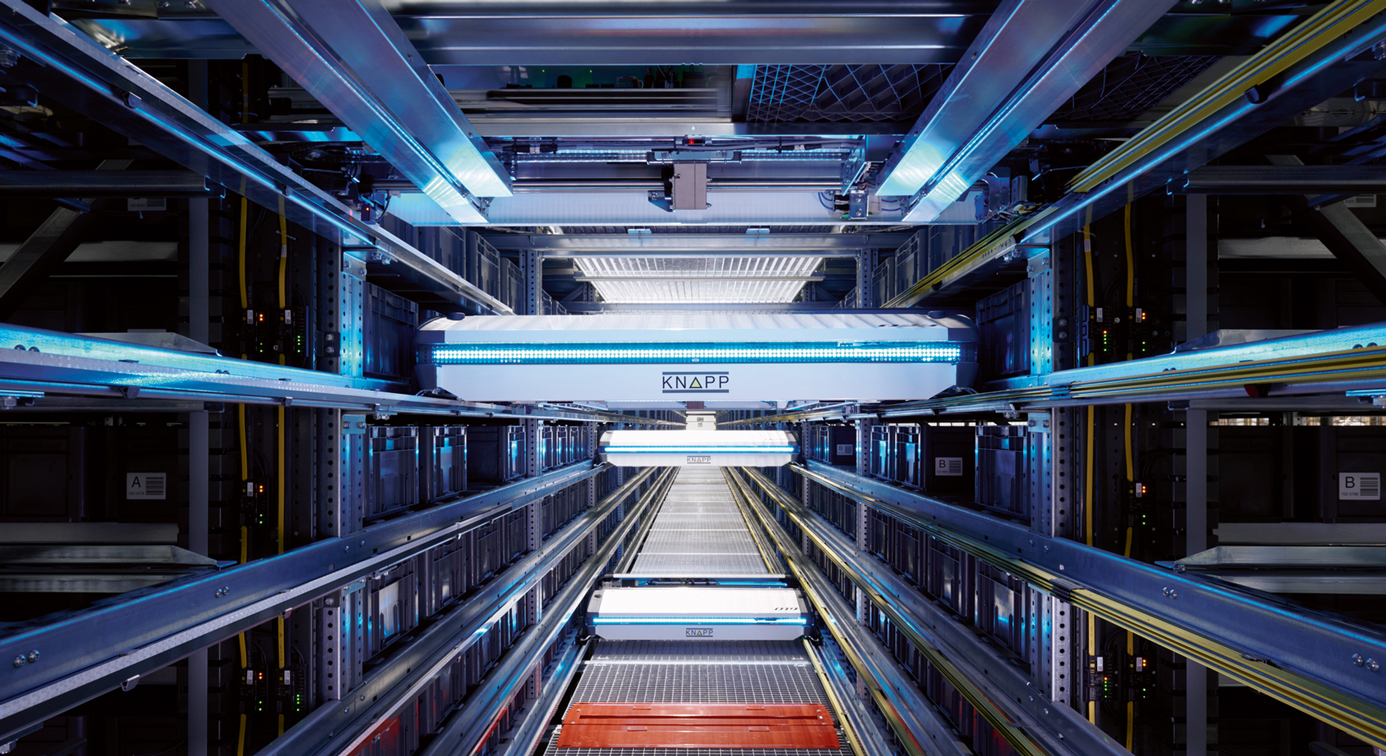
At the center of the freezer island is the Evo Shuttle, which stores both frozen goods and cold packs for delivery containers. Furthermore, the storage system doubles as a shipping buffer and supplies completed orders for delivery as needed.
Here, too, frozen foods are picked at temperatures well below freezing. Order containers from all temperature zones stacked for each specific delivery route are only assembled when goods are retrieved. Cooled delivery vehicles with separate temperature zones ensure that the cold chain is maintained until the groceries are delivered to the consumer.
Delivering frozen goods to stores fully automatically
When delivering goods to stores, items need to be stacked on pallets or roll containers in patterns that are stable, optimized for transport and store-friendly.
Robotic, fully automated picking and palletizing solutions are ideal for this process. Based on the customer order, fulfillment software calculates the right packing pattern, which the robot follows as it places the goods on the load carrier. The solution can fully automatically process goods of all types – dry, fresh, refrigerated or frozen.
It works in combination with the central storage system to give rise to a unified process. The solution provides items to the robot in the right order, which then palletizes them. The robot’s integrated transport securing device prepares the load carriers for shipping – perfectly designed to fit the layout of the store
Software connects cold chain and goods flow
The more temperature zones, order types and technologies work together, the more important it is to have software controlling the system end to end. Software coordinates storage, picking, buffering, sequencing and shipping. It connects individual technologies to form a complete solution that optimizes processes and goods flows.
For store delivery as well as e-grocery applications, software monitors dwell times and helps maintain the cold chain from goods-in and storage to picking and shipping – and in the case of e-grocery, until the consumer receives the delivery.
FAQs - Frequently asked questions
What are the advantages of automating a freezer warehouse?
Automation makes warehouse structures more compact, helps maintain controlled temperatures and reduces the amount of time employees have to spend in very cold areas. The right concept depends on your product range, business model, goods flow and national requirements.
Is the Evo Shuttle suitable for freezer warehouses?
The Evo Shuttle can be used in all temperature zones for food retail and can handle temperatures as low as -28° C (-18° F). When deployed in freezer warehouses, the Evo Shuttle is fitted with special components to handle the extra-cold conditions.
How can different temperature zones be connected?
Intelligent software coordinates storage, picking, buffering and shipping. Depending on the cold chain concept, it can also monitor dwell times and ensure that items are retrieved from the different temperature zones at the right time.
Key takeaway: The right concept matters
Whether integrated temperature zones, an independent freezer solution or fully automatic store delivery with robots, what matters is how the processes work together as part of the overall value chain. Together with our customers, we create solutions from frozen to fresh for all temperature zones, always optimized to meet their requirements.
Are you looking to automate your temperature-controlled processes? Find the right concept for your warehouse together with our experts.

Further reading recommendations

Additional Information
Are you interested in automating your freezer warehouse for food retail? We’d love to hear from you at blog@knapp.com.